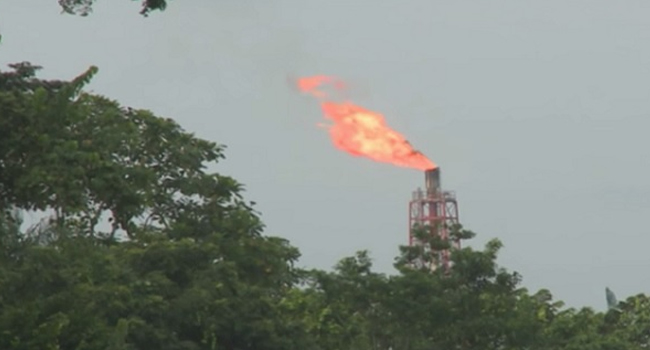

Africa remained an area of persistent flaring. wth Nigeria, Libya, and Algeria flaring more than 25 bcm of gas in 2025, despite widespread power shortages and efforts by several governments to expand domestic gas use.
The World Bank’s Global Gas Flaring Tracker, reported by Reuters, noted that global gas flaring rose to a six-year high in 2025, driven by increases in Russia and Iran.
This is as Nigeria’s upstream regulator, Nigerian Upstream Petroleum Regulatory Commission (NUPRC), said its metered data shows about 6.08 bcm of gas was flared in 2025, slightly below the World Bank’s 6.6 bcm estimate. It attributed the differences to satellite versus on-site measurement methods. It said the marginal increase in flaring was due to higher gas output.
“Nigeria’s commitment to end routine flaring by 2030 remains firm,” said Eniola Akinkuotu, spokesperson of the NUPRC, which he said has “a scheme to monetise gas flares”.
Nine countries — Russia, Iran, Iraq, Venezuela, Mexico, Libya, Algeria, and the U.S. currently account for more than four-fifths of global flaring while producing nearly half of the world’s oil.
Flaring climbed for a third consecutive year to 167 billion cubic metres, wasting an estimated $54 billion worth of gas and outpacing growth in global oil production.
The data points to a central challenge for the World Bank-backed Zero Routine Flaring by 2030 initiative, opens new tab: global progress depends heavily on a small group of oil-producing countries where weak infrastructure, limited gas markets, financing constraints, and uneven enforcement continue to slow investment in gas capture and processing.
“At a time when many countries are struggling to increase affordable and reliable energy, the economic development costs of continued flaring are simply too high,” said Demetrios Papathanasiou, World Bank Group global director for energy.
“The technologies and approaches needed to capture and utilize associated gas are well established. But in many oil-producing countries, gas utilization is not yet integrated as a core part of oil production planning, with infrastructure investment and regulatory enforcement often lagging,” said Zubin Bamji, Manager for the World Bank’s Global Flaring and Methane Reduction Partnership (GFMR).
Russia, Iran, and Iraq together flared about 84 bcm in 2025, nearly half the global total, with Russia and Iran accounting for much of the year-on-year increase, according to the data.
Energy ministries in the three countries declined to comment. But Russian newspaper Vedomosti Daily earlier this month cited data from the official statistics office called Rosstat that 25.1 billion cubic metres of associated gas were flared in 2025, an increase of 6.8% compared with 2024.
READ ALSO: FG Convenes Emergency Meeting, Invites EFCC, DSS, Police To End LPG Hoarding, Diversion
Eliminating routine flaring globally would require an estimated $70 billion to $100 billion, less than twice the annual value of gas now being wasted, the World Bank said.
“The technologies, policies, regulations, and financing mechanisms needed to capture and utilize associated gas are available,” said Zubin Bamji, World Bank manager for the Global Flaring and Methane Reduction Partnership.
“What is missing, in too many places, is the leadership, prioritization, and governance needed to put these solutions into practice,” Bamji added.