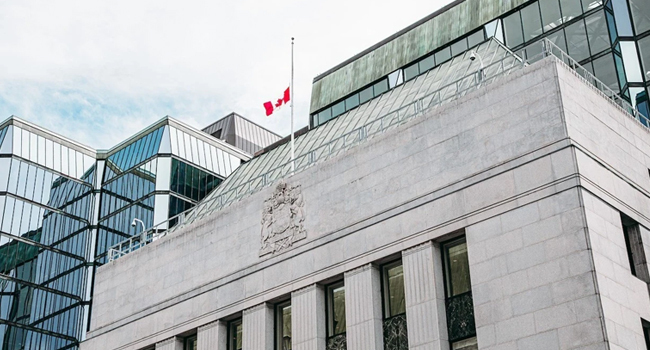
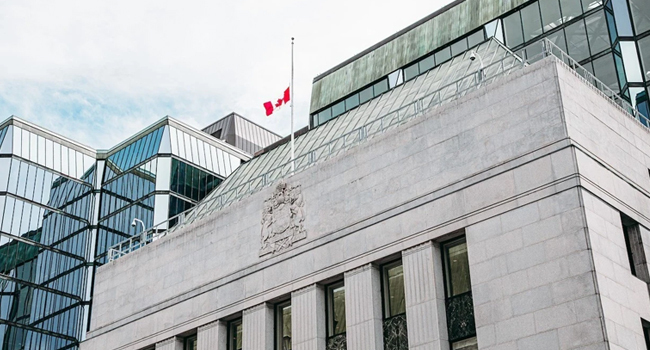
Canada’s central bank held its key lending rate at 2.25 per cent on Wednesday, warning the G7 economy faces significant headwinds as its future economic relationship with the United States remains uncertain.
The announcement marked the Bank of Canada’s fifth consecutive hold.
Canada has experienced two quarters of negative growth, a circumstance some economists label a technical recession.
READ ALSO: US Consumer Inflation Hits Fresh Three-Year High In May
Growth should return to positive in the second quarter of the year, the Bank of Canada said, while cautioning that challenges remain amid continued uncertainty over US President Donald Trump’s trade policies.
“Recession is not a word I would use,” Bank of Canada Governor Tiff Macklem told reporters.
“I would describe the economy as weak. It hasn’t really grown in the past year,” he said, stressing that the cloudy outlook for US trade policy has impacted business investment in Canada.
Both the United States and Canada have predicted that substantial parts of the existing North American free trade deal (USMCA) will be preserved when ongoing negotiations wrap up.
But Trump’s existing tariffs on auto, steel, aluminium and lumber are causing damage in Canada, and any new levies will bring further pain.
The United States, Canada and Mexico have all indicated negotiations on a revised deal will stretch on for months.
“That uncertainty will continue to weigh on the economy,” Macklem said, while underscoring that regardless of the outcome from the talks, Canadians understand that relations with the United States will stay volatile.
“Even with (a) deal, I don’t think you can be certain about anything,” Macklem said.
No resolution ‘In Sight’
The bank further warned that four months of conflict in the Middle East had caused higher energy prices and global supply chain disruptions that “are weighing on global economic growth and pushing up inflation”.
It reiterated that it would not raise rates to confront energy price inflation unless it believed cost increases were bleeding into other parts of the economy.
“So far, there has been limited evidence of broad-based pass-through of higher energy prices to other consumer prices,” the central bank said.
Macklem stressed that Canadian inflation had been contained at the bank’s desired target of roughly two per cent before the conflict began but was now edging closer to three per cent.
That sudden uptick in inflation was forcing the bank to weigh two conflicting realities: a struggling economy that may need lower rates to boost growth, alongside rising inflation that may warrant rate hikes.
The duration of Middle East hostilities remains crucial, Macklem said.
“There’s no clear resolution in sight. We don’t know what that resolution would look like.”
AFP