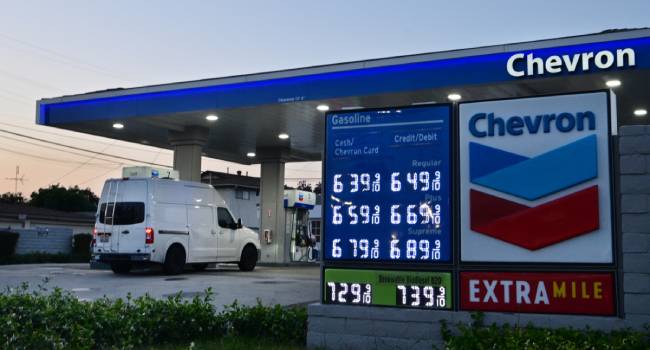

The price of oil fell on Friday after Iranian media reported that Tehran had proposed fresh talks with the United States in a message sent via mediator Pakistan.
A barrel of West Texas Intermediate (WTI) fell briefly more than five per cent, dipping below the symbolic $100 mark, before clawing back to stand at $101.7 by 1530 GMT.
The other main US benchmark, Brent North Sea crude, also recovered slightly, initially dropping by more than three per cent to $106.98 before edging back to $108.4. At the start of the US-Israeli war on Iran in late February, Brent was almost $73 a barrel and WTI $67.
“The Islamic Republic sent the text of its latest proposal to Pakistan, the mediator in the talks with the United States, on Thursday evening,” the official IRNA news agency reported, without providing further details.
Both benchmarks had started Friday’s session edging upward, with the prolonged blockade of the Strait of Hormuz continuing to obstruct oil exports from the Gulf.
READ ALSO: Oil Crisis Fuels Calls To Speed Up Clean Energy Transition
With strategic crude reserves dwindling, investors are closely watching for any sign of an improvement in supply.
“Every week of delay before the Strait of Hormuz reopens adds about $5 to the average price per barrel” for investors, analyst Ole Hvalbye told AFP.
Meanwhile, seven members of the OPEC and OPEC+ group are to decide on Sunday on production quotas for the first time since the United Arab Emirates left the cartel.
The group is expected to increase its quotas by 188,000 barrels per day, according to Arne Lohmann Rasmussen, chief analyst with Global Risk Management.
But he added that the meeting was “largely irrelevant” for prices as members including Saudi Arabia, Kuwait and Iraq, were “unable to produce that oil” owing to the conflict.