Finally, the die is cast. January 16, 2027, like the 2023 presidential run, promises another three-way electoral battle.
And, as the countdown gathers momentum, the major political parties are already assembling their campaign machinery, preparing for what could become one of the most consequential presidential contests in Nigeria’s recent history.
Kwara has 1,916,376 registered voters. Tinubu won the state in 2023 with 263,572 votes, against Atiku’s 136,909.
Governor AbdulRahman AbdulRazaq’s political structure gives the APC a significant advantage.
Yet, the involvement of prominent Kwara figures in the ADC, including its National Publicity Secretary Bolaji Abdullahi, creates an opportunity for the opposition to challenge established loyalties.
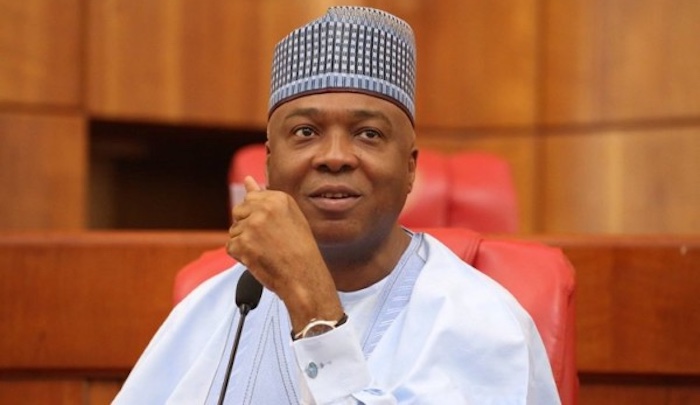
There is also the Dr. Abubakar Bukola Saraki factor, which remains constant. With the PDP fast pushing back in the run-up to 2027, the competition in Kwara is going to be a very tough one, especially that Saraki not only has name recognition but considered a thorough strategist in ‘political science’ and its operations.
The significance of Kwara, therefore, extends beyond the presidential vote. Competing ambitions over the state’s succession politics and control of local structures could influence how enthusiastically party stakeholders prosecute the national contest.
The North-Central cannot be written off by Tinubu’s opponents, nor can the president take it for granted. In a close national election, relatively small shifts in Benue, Plateau or Nasarawa could prove decisive.
The 25 Per Cent Question: A Constitutional Calculation
There is another important dimension to the 2027 election analysis. Under Section 134 of the 1999 Constitution, as amended, a presidential candidate must satisfy the relevant national vote requirement and secure at least one-quarter of votes in no fewer than two-thirds of the states.
In practical terms, the geographical spread requirement has been interpreted to mean at least 25 per cent in 24 states, with the FCT not enjoying a separate mandatory veto over the outcome.
This matters because a candidate does not have to obtain 25 per cent in every northern state to become president. Nor does winning a majority of the 19 northern states guarantee the presidency. What matters is the national vote total and the required geographical spread.
Tinubu’s 2023 performance in Adamawa illustrates why relatively small changes in the distribution of votes may acquire constitutional significance.
The president secured approximately 25.01 per cent there, an extraordinarily narrow clearance of the threshold. But the broader lesson is that electoral strategy must be based on the total number of qualifying states, rather than isolated assumptions about northern performance.
Atiku, Obi and the Problem of Opposition Arithmetic
Although Atiku possesses a substantial electoral history across northern Nigeria, his claim to the region is compounded by the emergence of Obi and Kwankwaso on a joint ticket.
INEC’s published presidential candidates’ list confirms the contestants rather than leaving their political alignments to speculation.
Tinubu is running with Shettima on the APC platform.
Atiku is contesting under the African Democratic Congress with a former Rivers State governor, Rotimi Amaechi, as his running mate.
Obi is the NDC candidate with Kwankwaso as his running mate.
Oyo State Governor Seyi Makinde is contesting on the platform of the Allied Peoples Movement, among other fringe candidates and parties.
These arrangements create a dramatically different electoral environment from 2023.
For Atiku, the advantage is that he remains the most prominent northern presidential candidate among the leading contenders, with demonstrated support in many of the region’s states.
The disadvantage is that northern voters are not obliged to vote along geographical lines. Tinubu has already proved that a southern candidate can secure a majority of his national votes from the North except that in 2027, he will run, not on promises, but his record.
Obi, meanwhile, must demonstrate that his 2023 appeal can travel beyond its strongest constituencies, particularly through Kwankwaso’s organisational network in Kano and neighbouring states.
There is a temptation to assume that the votes Obi and Kwankwaso secured separately in 2023 will simply combine in 2027. Such a calculation is attractive but potentially misleading.
Different party platforms, voter turnout, religious considerations, personal loyalties, candidate preferences and the political circumstances of the election will all affect whether that combination materialises.
Besides, Kwankwaso’s political machine is no longer operating under the same conditions as 2023, following Yusuf’s departure.
For Tinubu, there is an obvious advantage in opposition fragmentation. If Atiku and Obi compete for substantially the same pool of voters in Kano, Kaduna, Plateau or other competitive states, the APC could benefit from a divided opposition even where the majority of voters prefer change.
But this advantage is not automatic. The two opposition tickets are capable of attracting different constituencies. Their rivalry might also energise additional voters rather than merely divide existing support.
What is clear is that the battle for the North now has more than two serious political dimensions. And the president’s survival may depend, in part, on his opponents’ inability to translate their dissatisfaction with his government into one overwhelming electoral alternative.
Can the S’East Governors Contain Obi?
Although the North is central to the presidential arithmetic, the outcome will not be determined there alone. The South-East remains one of the most important regions for testing the effectiveness of political realignment.
However, Obi’s performance in the zone was not without some machinations from certain unseen hands. A former Rivers State governor, Nyesom Wike, recently shed light on this when he said the G-5, a group of governors he set up in the lead up 2023 intentionally worked for Obi to cut down Atiku’s votes.
Obi’s dominance in 2023 was extraordinary. In Anambra, he received 584,621 votes against Tinubu’s 5,111. In Enugu, Obi secured 428,740 votes against Tinubu’s 4,772. In Abia, he obtained 327,095 votes, compared with Tinubu’s 8,914.
Those were not ordinary victories. They were electoral landslides. Yet, the region’s political leadership has undergone significant changes. Some of those factors are no longer available. What is therefore likely to happen to Obi in the zone in 2027?
Governor Charles Soludo of Anambra, Obi’s home state, has openly supported Tinubu. Governor Hope Uzodinma of Imo remains a prominent figure in the APC eastern political structure, although he is fighting his own demons internally.
Governor Peter Mbah of Enugu and other regional leaders have also become important factors in the shifting alignment around the president. Even the Abia State Governor, Alex Otti, is believed to be sympathetic to the Tinubu cause.
But there is a profound distinction between political endorsement and electoral conversion.
The challenge for Soludo, Mbah, Uzodinma and other pro-Tinubu interests is not merely to announce support for the president. It is to persuade voters who overwhelmingly rejected the APC in 2023 to reconsider. That is altogether a different undertaking.
If Tinubu substantially improves his performance in the South-East, even without winning the region, he could compensate for some northern losses, which seem to stare him in the face at the moment.
Conversely, if Obi retains his overwhelming advantage, the president would have fewer opportunities to offset significant damage elsewhere.
The 25 per cent threshold is particularly relevant here because Tinubu’s previous results in several South-East states were nowhere near that level.
The question, therefore, is not whether governors can mobilise some support for Tinubu. It is how much support they can realistically generate against an opponent, who remains deeply identified with the region’s presidential aspirations.
Olawale Olaleye
Follow us on: