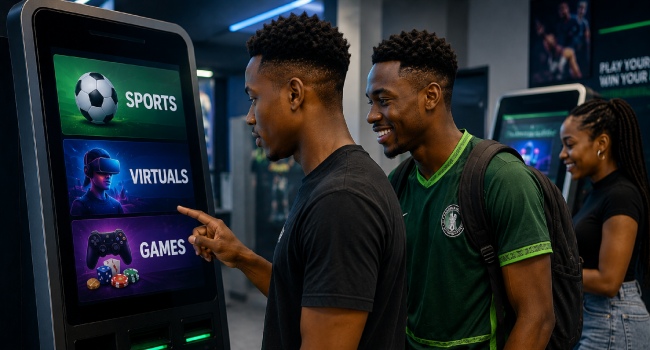
The distinction between physical sportsbooks and digital platforms has become more vague. Today’s customer no longer experiences sports entertainment through a single channel but moves between mobile apps, retail locations, loyalty programmes, live broadcasts, and self-service technologies throughout a sporting event.
This shift has given rise to the omnichannel sportsbook, where digital and in-person experiences work together rather than compete. Within this ecosystem, the betting terminal remains an important touchpoint, offering customers a convenient way to interact with sports markets while complementing mobile and online services.
The Retail Sportsbook Is Becoming More Digital
Traditional retail gaming relied on counters staffed by employees, on paper slips, printed odds, and cash payment. Those elements are still there in some markets, but they are changing rapidly. Self-service terminals, digital odds boards, big screens, account access, and integrated payment systems are increasingly common features of modern venues.
This isn’t to say the retail sportsbook will be going away. It simply signifies a retail sportsbook is getting more connected. These terminals can provide quicker access to markets, shorter queues, more digital experience options, and greater efficiency for venues during busy events.
Terminals also provide operators with consistency. All odds, markets, promotions, and account logic available online can be mirrored in the venue. That lends the retail sportsbook a sense of belonging to a larger unit rather than a standalone retail business.
Why Terminals Still Matter In An App-First Market
While mobile operations and its technology have revolutionized the sports gaming industry, self-service terminals still play a part. Not all customers will want to use a phone in a venue. Some like a bigger screen, a more specific UI, or to feel like it’s not their device and that they are self-serving.
Across stadiums, casinos, retail sportsbooks, racecourses, and sports bars, self-service terminals allow customers to interact with available markets while enjoying live sporting events. Rather than replacing mobile apps, they complement them by offering an alternative access point that eliminates the need to download an app or navigate a mobile device during busy events.
This flexibility is particularly valuable for walk-in visitors and occasional customers who may not already have a sportsbook app installed. Within an omnichannel model, every interaction, whether online or in person, contributes to a more connected customer experience.
Connected Accounts Create A Seamless Experience
One of the biggest developments in recent years has been the integration of customer accounts across digital and retail channels. Terminals become significantly more useful when connected to a user’s account, loyalty programme, digital wallet, or mobile application.
This integration allows customers to move effortlessly between platforms. For example, they may browse available markets on a mobile app, complete a transaction at a terminal, follow live events within the venue, and later access their activity through their online account, all without interruption.
For operators, connected systems also provide valuable insights into customer behaviour across different channels. Understanding how customers interact with retail locations alongside digital platforms enables providers to improve services, optimise venue layouts, and identify opportunities to strengthen responsible play measures.
Personalisation also becomes possible through account integration, provided it is implemented responsibly. The goal should always be to simplify the customer journey while maintaining transparency and user control.
Payments Are Central To The Omnichannel Experience
Payment convenience has become a defining feature of the modern sportsbook experience. With the omnichannel model, customers anticipate a seamless experience when it comes to deposits, withdrawals, vouchers, cash, cards, wallets, and account balances.
Self-service terminals support multiple payment options, allowing customers to choose the method that best suits their preferences. Whether paying with cash, using stored account balances, or redeeming printed vouchers, the emphasis remains on speed, simplicity, and convenience.
During live sporting events, such as a racecard, where markets can change rapidly, an efficient payment process becomes even more important. Reducing unnecessary steps helps create a smoother customer experience and improves the overall effectiveness of self-service technology.
The top omnichannel sportsbooks consider payments a product rather than a back-office task.
Better Data Can Improve Venue Operations
Beyond customer convenience, terminals generate valuable operational insights for venue operators. Usage data can reveal peak activity periods, queue patterns, popular markets, and areas where customers encounter friction during their journey.
These insights help operators make informed decisions about terminal placement, staffing requirements, and venue capacity during major sporting events. They also support continuous improvements to the customer interface by identifying navigation issues or commonly abandoned processes.
Rather than simply processing transactions, modern terminals have become an important source of business intelligence, helping operators refine both the retail environment and the overall customer experience.
Responsible Play Should Be Integrated Across Every Channel
As self-service technology becomes more sophisticated, responsible play measures remain an essential part of the customer experience. The same safeguards available on digital platforms should also apply within retail environments.
Features such as deposit limits, self-exclusion tools, age verification, session reminders, and spending controls should remain consistent regardless of how customers choose to access sportsbook services. Connected account systems make it easier to apply these protections across multiple touchpoints while ensuring a consistent experience.
Thoughtful terminal design also contributes to responsible use by providing clear transaction confirmations, accessible account information, and visible support resources whenever needed.
The Future Is Hybrid
The future of the sportsbook industry is unlikely to be exclusively digital or entirely venue-based. Instead, it will continue to combine physical locations with connected digital services that allow customers to move naturally between mobile apps, retail venues, self-service terminals, and online accounts.
Within this evolving ecosystem, the betting terminal remains an important component. Rather than competing with mobile technology, it complements it by providing greater flexibility, improving operational efficiency, and delivering a more connected retail experience.
As customer expectations continue to evolve, successful sportsbook operators will increasingly focus on creating seamless experiences across every touchpoint—whether online, in person, or somewhere in between.