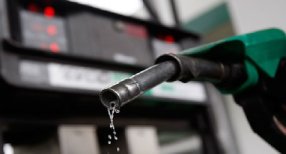
The Major Energy Marketers Association of Nigeria (MEMAN) has explained the reason petrol prices in Nigeria often rise rapidly but take longer to decline.
Speaking during a webinar on Tuesday, the association’s Chairman, Hubb Stokman, attributed the trend to cost recovery pressures, stock positions, and market volatility.
When prices increase suddenly, marketers are compelled to adjust pump prices quickly to remain in business, he noted, adding that fuel prices always go up faster than they go down.
He explained that the speed of price increases is largely driven by the need for marketers to generate sufficient working capital to purchase the next supply of fuel, saying this happens in other businesses.
The pattern, Stokman noted, is not unique to Nigeria but reflects how markets respond to sharp changes in global oil prices.
“But I think, actually, this is not unusual. Maybe fuel is one of the most visible products that does it. But if you go to other fast-moving consumer goods, it’s almost the same. And sometimes people forget that what happens when prices go up, especially rapidly, is that the dealers need to quickly generate the working capital to buy the next truck. And you only do that by reflecting the price increases at the pump,” he stated.
According to him, marketers who fail to adjust quickly risk being unable to restock, which could ultimately disrupt supply.
However, he said the reverse is often more gradual when prices begin to decline, largely due to existing inventory purchased at higher costs.
“And then when it eases off, what you try to do also is not to go as quickly down again, necessarily, but you might sometimes ease it down a little bit, especially if you’ve got the high stakes to create what they call a ‘parachute’,” he said.
He explained that this approach helps marketers avoid sudden price swings that could destabilise the market, “so that you don’t go up, go down, go up, go down. You should try to ease it down.”
Stokman noted that in periods of heightened global volatility, such as the ongoing Middle East crisis, price movements can appear even more pronounced.
“In a situation like the Middle East, where it’s all a bit more volatile, that always looks a little bit different because you’ve got a shock,” the major marketers said.
He emphasised that petrol pricing in Nigeria is closely tied to international market dynamics, given the deregulated nature of the downstream sector.
“Normally, you see these price changes in any other fast-moving consumer good. Fuel prices are just, because of their international nature, a little bit more transparent than many other products,” he stressed.
The MEMAN chairman added that the transparency of fuel pricing often makes the trend more noticeable to consumers compared to other goods.
Nigeria’s petrol market operates largely on import parity pricing, meaning domestic prices reflect global crude oil benchmarks and foreign exchange dynamics.
Also speaking, an energy expert, Joe Nwakwue, said the country remains exposed to international oil price volatility.
According to him, whatever happens anywhere in the world that impacts Brent crude will be transmitted directly to the domestic market.
Nwakwue added that while mechanisms such as the naira-for-crude policy could help reduce exposure, the structure of the market means global shocks will continue to influence local prices.
He further stressed the importance of maintaining a competitive market structure to ensure fair pricing.
“And that’s where I think there should be a contestable market. So, in practical terms, if that refinery knows that importers will bring in products and sell at a margin, its pricing will be influenced by that,” he said.
He added that allowing imports remains key to preventing price distortions.
“My personal view is that at all times, the only way today that you can have a contestable market is that you continue to allow imports,” the partner at Zeta Advisory and Consulting said.
The explanations come amid growing public concern over fuel price fluctuations, with stakeholders calling for clearer policies and measures to cushion the impact on consumers.
How Mideast Crisis Affects West Africa Downstream Sector
Stokman noted that the ongoing crisis in the Middle East has heightened uncertainty in global oil markets, particularly due to concerns over supply disruptions and critical shipping routes such as the Strait of Hormuz.
He explained that these developments have triggered increased volatility in oil prices, higher freight costs, and shifting global supply chains.
According to him, while the situation presents challenges for downstream operators and consumers through rising costs, it also offers a strategic opportunity for West Africa—particularly Nigeria—to position itself as a reliable energy hub given its high-quality crude, expanding refining capacity, and large domestic market.
Providing global market insights, S&P Global Energy’s Associate Editorial Director, Gary Clark, highlighted a sharp rise in margins for refined products such as diesel and jet fuel, driven by supply disruptions and increased risk premiums.
He added that logistical constraints, including vessel rerouting, have further tightened supply and increased costs globally.
READ ALSO: AEC Urges Africa’s Inclusion Ahead Of Energy Summit In London
On regional vulnerabilities, Stanislas Drochon, Africa Head of Fuels and Refining at S&P Global Energy, stressed that Sub-Saharan Africa remains exposed to external shocks due to heavy reliance on imports, limited refining capacity, and inadequate storage infrastructure.
He called for sustained investment in supply chain systems to enhance long-term energy security.
In his contribution, energy expert Joe Nwakwue described Nigeria’s ongoing transition to a deregulated downstream market as a period of adjustment marked by price volatility and structural shifts.
He emphasised the need for a competitive and well-regulated market supported by policy clarity and diversified supply sources.
Despite these challenges, Stokman maintained that Nigeria remains relatively stable, citing over 30 days of petrol supply coverage and the role of NNPC Limited as supplier of last resort.