Three Vietnamese airlines announced nearly $37 billion in purchases Wednesday, in a series of contracts signed with US aerospace companies.
The agreements come as Hanoi and Washington continue trade negotiations on US tariffs on Vietnamese products, currently set at 20 percent.
The Southeast Asian nation posted eight percent growth last year despite the new US tariffs, defying expectations when many feared the collapse of its export-driven growth model.
Fledgling airline Sun PhuQuoc Airways said Wednesday it placed an order for 40 of Boeing’s 787 Dreamliners, a long-haul aircraft, with an estimated total value of $22.5 billion.
Founded just a year ago, the airline said in a statement that the purchase “reflects Sun PhuQuoc Airways’ strategic ambition to build a truly intercontinental network.”
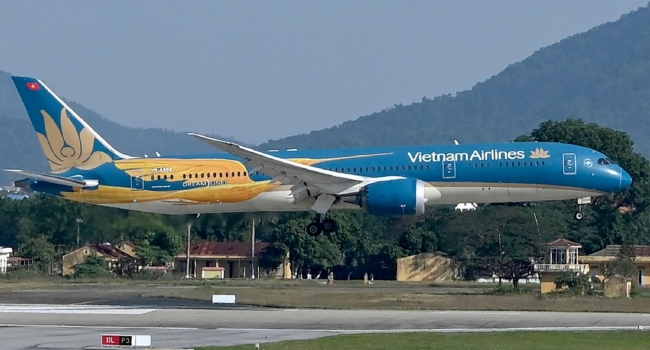
National carrier Vietnam Airlines placed an $8.1 billion order for around 50 Boeing 737-8 aircraft, and opened discussions for an additional order for around 30 wide-body aircraft in the future, the airline said in a statement.
READ ALSO: UK Inflation Falls To 3.0% In January, Meeting Expectations
The agreement creates “a solid foundation for our ambition to become a leading airline by 2030,” the carrier’s chairman, Dang Ngoc Hoa, said in the statement.
Low-cost carrier Vietjet Air also announced two contracts, totalling $6.3 billion.
Of that, about $5.4 billion will go toward supplies and maintenance of engines for 44 Airbus A320 series aircrafts by US manufacturer Pratt & Whitney.
Around $960 million remaining will go towards leasing six Boeing 737 series aircraft from Griffin Global Asset Management.
The signing took place on the sidelines of Vietnamese leader To Lam’s visit to Washington, where he is expected to join the inaugural meeting of US President Donald Trump’s “Board of Peace.”
The two countries held a sixth round of trade talks this month, but have not reached a final agreement.
Last year, Vietnam, a manufacturing hub in the region, saw a 28 percent surge in exports to the US — its largest export market — while its trade surplus swelled to $134 billion, according to official figures.
When Trump announced his “Liberation Day” tariffs in April, Vietnam had the third-largest trade surplus with the US of any country after China and Mexico, and was targeted with one of the highest rates in Trump’s tariff blitz.
But by July, Hanoi secured a minimum 20 percent tariff with Washington, down from more than 40 percent, in return for opening its market to US products including cars.
The communist country has long been a success story among Asian economies.
It aims to grow its economy by at least 10 percent this year, and is vying for “middle-income country” status by 2030.