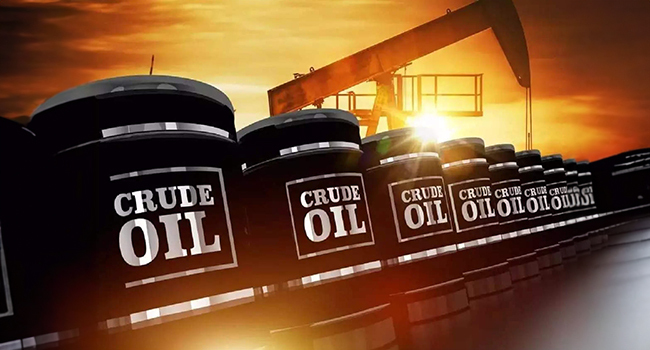
Nigeria’s energy sector has staged an industrial comeback, with active oil rigs skyrocketing from just eight in 2021 to 69 by late 2025.
Speaking at the 9th Nigeria International Energy Summit (NIES) on Tuesday, President Bola Tinubu declared an end to “prolonged underinvestment,” citing $8 billion in fresh investment as proof that the nation’s radical policy overhaul is paying off.
Represented by Vice President Kashim Shettima, the president credited transparency measures and fiscal incentives under the Petroleum Industry Act (PIA) for providing regulatory certainty long sought by international oil companies.
“We inherited a sector rich in potential but constrained by inefficiencies,” he said. “Through fully digital and competitive licensing rounds, we are unlocking opportunities and rebuilding trust with the global investment community.”
While crude oil remains Nigeria’s immediate economic driver, natural gas was highlighted as the cornerstone of future growth. Average daily gas production has reached 7.6 billion standard cubic feet (BSCFD), with domestic supply surpassing 2 BSCFD for the first time—a milestone for powering local industry.
READ ALSO: FPSO To Increase Oil Production By Over 40,000 bpd, Says Lokpobiri
The government’s “Project One Million” initiative targets 2.5 million barrels of oil per day by 2027 and aims to scale gas output to 10 BSCFD by 2030, positioning gas as central to a “just transition” that creates jobs and reduces emissions.
At the event, the Minister of State for Petroleum Resources (Oil), Senator Heineken Lokpobiri, broadened the focus to continental energy security, describing the summit as a “call to action” to end energy poverty across Africa.
Lokpobiri cited landmark projects such as Shell’s $5 billion Bonga North and TotalEnergies’ $550 million Ubeta development as proof that Nigeria is “investment-ready.”
He also highlighted the African Energy Bank, headquartered in Nigeria, as a tool to help the continent retain more of its hydrocarbon wealth.
The summit, themed Energy for Peace and Prosperity: Securing Our Shared Future, drew high-level participation, including the Presidents of Gambia and Equatorial Guinea, as well as industry leaders such as the Nigerian National Petroleum Company Limited (NNPCL) Group Chief Executive Officer (GCEO), Bayo Ojulari.