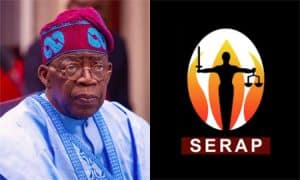
The Socio-Economic Rights and Accountability Project (SERAP) has urged President Bola Tinubu to immediately direct the Department of State Services (DSS) to withdraw its threat to ban the social media platform, 𝕏, following comments made by activist Omoyele Sowore.
In a statement on Sunday, SERAP described the DSS position as an attack on freedom of expression, warning that banning 𝕏 would amount to “collective punishment” against millions of Nigerians.
“The threat against 𝕏 if carried out would have a chilling effect on the exercise of Nigerians’ rights to freedom of expression, media freedom and access to information online,” the statement read.
SERAP reminded authorities that access to Twitter, now 𝕏, had already been recognised by the ECOWAS Court of Justice as a fundamental human right.
The group emphasised that Nigeria’s Constitution and international treaties, specifically, Section 39 of the 1999 Constitution, Article 9 of the African Charter on Human and Peoples’ Rights, and Article 19 of the International Covenant on Civil and Political Rights, all guarantee freedom of expression.
“The DSS should stop pressuring 𝕏 to censor online content, in violation of privacy, freedom of expression, media freedom, and access to information. We’ll see the administration in court if the threat is not immediately withdrawn,” SERAP warned.
SERAP likened the DSS posture to the 2021 suspension of Twitter under former President Muhammadu Buhari, which the ECOWAS Court later declared unlawful.
The organisation argued that restrictions on online speech must meet strict standards of legality, necessity, proportionality and legitimacy under Nigerian and international law.
Quoting the UN Human Rights Committee, SERAP added, “Public officials are legitimately subject to criticism and political opposition.”
The group added, “Nigerian authorities cannot use repressive and non-human rights compliant laws to restrict Nigerians’ human rights offline and online.”
The full statement reads, “President Tinubu should direct Nigeria’s State Security Service (SSS, also known as DSS) to immediately withdraw the implied threat to ban 𝕏 (formerly Twitter) in Nigeria over a tweet by journalist Omoyele Sowore.
“The threat against 𝕏 if carried out would amount to collective punishment and crackdown on access to social media and have a chilling effect on the exercise of Nigerians’ rights to freedom of expression, media freedom and access to information online.
“The ECOWAS Court of Justice has held that access to Twitter is a fundamental human right.
“Freedom of expression is indeed a fundamental right which is protected under section 39 of the Nigerian Constitution 1999 [as amended] and article 9 of the African Charter on Human and Peoples’ Rights and article 19 of the International Covenant on Civil and Political Rights to which Nigeria is a state party.
“Nigerian authorities are required to take steps to protect the important function of independent media online and offline to ensure free communication of information and ideas between citizens and elected representatives and to inform public opinion.
“Nigerian authorities cannot use repressive and non-human rights compliant laws to restrict Nigerians’ human rights offline and online.
“Any restriction of the right to freedom of expression online and offline must adhere to the constitutional and international requirements of legality, necessity and proportionality, and legitimacy.
“The threat would lead to an unnecessary or disproportionate interference with freedom of expression.
“The UN Human Rights Committee has stated in its General Comment No 34 that all public figures are “legitimately subject to criticism and political opposition.”
“While Nigerian authorities have a responsibility to ensure compliance with national and international law, they must ensure that the ability of Nigerians to exercise their human rights is not undermined.
“The threat by the DSS seems to be a replay of the suspension of Twitter in Nigeria by the administration of the former president Muhammadu Buhari.
“The ECOWAS Court then declared unlawful the suspension of Twitter by the Buhari administration and ordered the administration never to repeat it again.
“The Court also held that the act of suspending the operation of Twitter is unlawful and inconsistent with the provisions of Article 9 of the African Charter on Human and Peoples’ Rights and Article 19 of the International Covenant on Civil and Political Rights.
“The DSS should stop pressuring 𝕏 to censor online content, in violation of privacy, freedom of expression, media freedom, and access to information.
“We’ll see the administration in court if the threat is not immediately withdrawn.”
The post Stop DSS Threat To Ban 𝕏 Over Sowore’s Post – SERAP To Tinubu appeared first on Naija News.