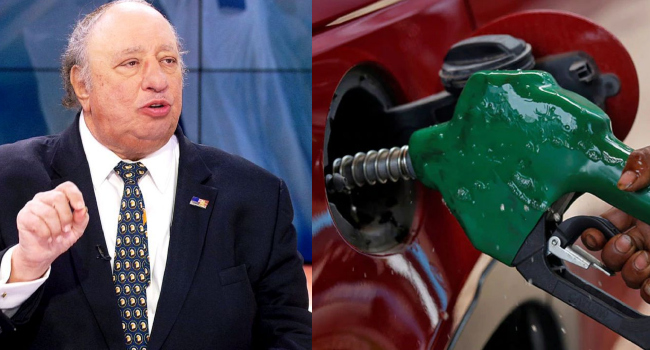
Consumers will get relief from the rapid increases in fuel prices at the pumps in a month or two, John Catsimatidis, the billionaire owner of a Pennsylvania refinery and New York supermarket chains, told Reuters in an interview.
His stance followed supply disruptions caused by the Israel-U.S. war with Iran, which has sent fuel prices skyrocketing.
“I believe prices will come back down in the next month, worst case scenario, two months,” said Catsimatidis, a major Republican donor, who said he thought the worst of the increases was over.
Oil prices soared back above $100 Thursday as Iran’s fresh attempts to hit supplies in the Middle East and threats to bring down the global economy overshadowed a record release of strategic crude by the International Energy Agency.
READ ALSO: Oil Producers Should Invest In Nigeria To Diversify Supply In Time Of Crisis — Tuggar
Catsimatidis, chairman and chief executive officer for United Refining Co, said the crisis highlights a need for more investment in oil production and refining. Asked if he would consider upgrading or expanding United Refining’s 70,000 barrel-per-day refinery in Warren, Pennsylvania, he said: “Absolutely, yes.”
As the US-Israel strikes on the Islamic Republic approached their third week, the conflict showed no signs of letting up, with Tehran responding with more retaliatory attacks across the Gulf.
READ ALSO: Brent Crude Back Above $100 On Mideast War
The IEA said Wednesday that its members had agreed to unlock 400 million barrels of oil from their reserves — their largest release ever — with 172 million coming from the United States.
However, the move was unable to overcome fears about the choking of energy supplies from the Middle East, with the Strait of Hormuz — through which a fifth of global crude passes — effectively shut down.
Both main crude contracts soared. Brent jumped more than nine percent to hit as high as $101.59 a barrel, while WTI spiked at just short of $96. The two had rocketed as much as 30 per cent Monday to a peak of nearly $120.
Catsimatidis’s stance comes after Nigeria’s Foreign Minister, Yusuf Tuggar, advised Gulf oil and gas producers to see the country as a partner and not a rival amid the Middle East conflict.
According to him, Nigeria’s untapped reserves offer Gulf states an alternative source of crude and gas at a time when global flows are vulnerable, and demand for hydrocarbons is set to remain strong for years.
“It’s in line with what we’ve always advocated – that countries which might otherwise consider us competitors should partner with us and invest so they can diversify their market share, working with us,” he said.