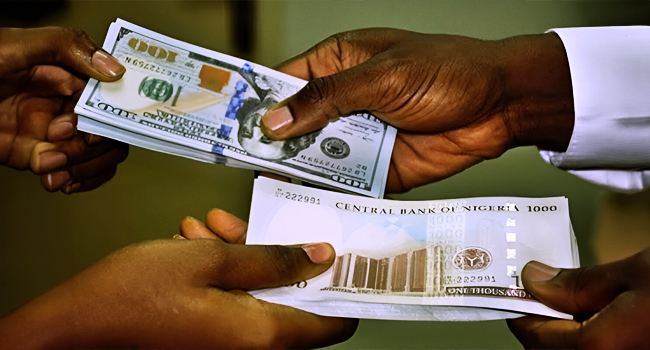
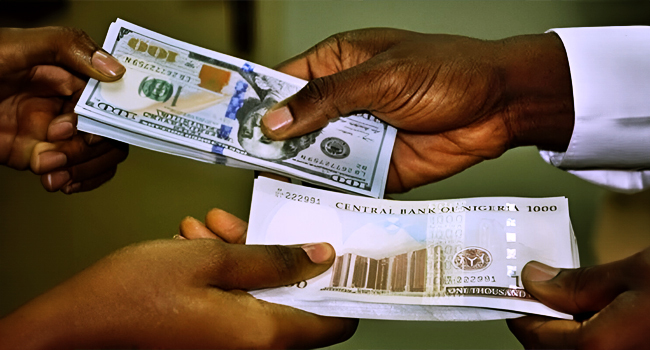
The Naira fell further to ₦1,398 per dollar on Friday, the weakest level since January 28, 2026, when it settled at ₦1,394/$.
According to data from the Central Bank of Nigeria, the currency fluctuated between ₦1,404/$ and ₦1,398/$ on the last day of the week’s trading session.
The simple average exchange rate settled at N1,394.55/$.
The development was after it opened on Monday at ₦1,376/$ before weakening to ₦1,390/$ on Tuesday.
The currency recorded its only gain of the week on Wednesday, appreciating slightly to ₦1,382/$.
Its recovery was, however, cut short as the naira resumed its downward trend, closing at ₦1,388/$ on Thursday and weakening further to ₦1,398/$ on Friday.
From ₦1,337/$ recorded on February 17, the currency has gradually lost value in subsequent trading sessions.
Market analysts attribute the naira’s latest slide to ongoing foreign exchange liquidity constraints and continued speculative activity in the market.
Despite the recent depreciation, the Central Bank of Nigeria has pointed to improvements in Nigeria’s external reserve position.
The CBN Governor, Olayemi Cardoso, recently disclosed that the country’s net foreign exchange reserves rose to $34.80 billion at the end of 2025, while gross reserves climbed to $50.45 billion as of February 2026.
The apex bank noted that stronger oil earnings and improved foreign inflows could help support reserve levels and stabilise the currency over the medium term.
READ ALSO: Drones Hit Oil Sites, Airports In Iraq
External factors, such as the Middle East tensions, have also contributed to the naira’s weakness.
Additional pressure on emerging market currencies, including the naira was also caused by strengthening of the US. dollar to a three-month high amid rising geopolitical tensions in the Middle East.
The dollar index had climbed nearly 1% on Monday, the currency’s strongest single-day gain in seven months as investors sought safety.