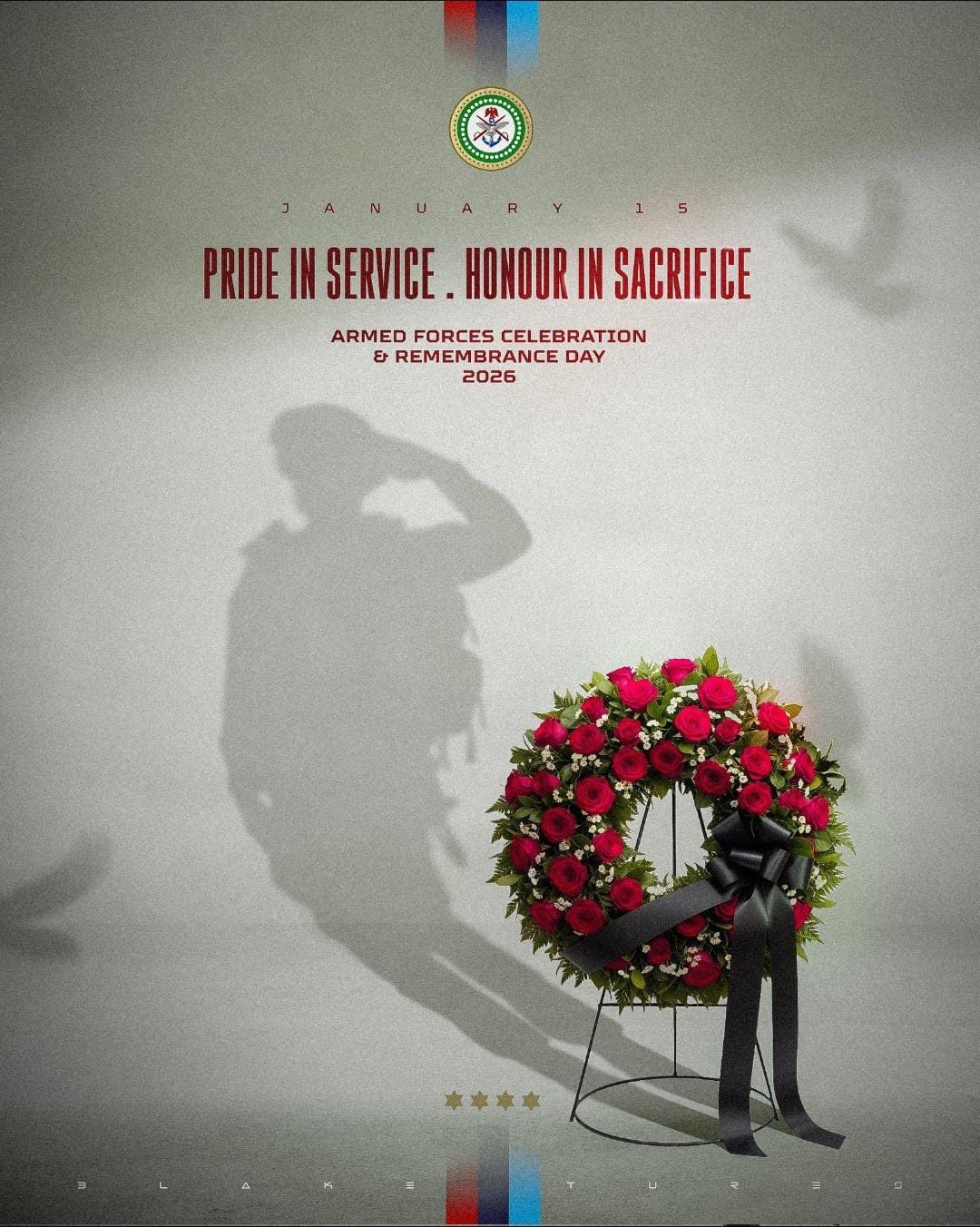
January 15 is etched into Nigeria’s national consciousness as Armed Forces Remembrance Day, a solemn occasion set aside to honour the men and women who laid down their lives in defence of the country’s sovereignty and unity. It marks, historically, the end of the Nigerian Civil War in 1970, a conflict that tested the very foundations of the Nigerian state. More than five decades later, as wreaths are laid and bugles sound across the country, the day compels us to ask a deeper and more unsettling question: is Nigeria truly a nation, or merely a geographical expression held together by force and ritual remembrance?
Armed Forces Remembrance Day is meant to be a moment of collective reflection, gratitude, and national solidarity. Yet, beyond the ceremonial pageantry, it exposes the contradictions at the heart of Nigeria’s existence. A nation, in the classical sense, is not simply a territory with borders, a flag, and an army. It is a shared sense of belonging, mutual obligation, and collective destiny. It is the conviction among citizens that their sacrifices, especially the ultimate sacrifice of life, are made in service of a just, inclusive, and meaningful common good. On this score, Nigeria continues to struggle.
The soldiers we remember on January 15 died believing, or at least being told, that they were defending a united Nigeria. Many fell during the civil war, others in peacekeeping missions abroad, and thousands more in recent decades battling insurgency, banditry, separatist violence, and communal conflicts. Their courage is not in doubt. What is in question is whether the country they defended has sufficiently honoured their sacrifice by building a nation worthy of it.
In today’s Nigeria, insecurity has become pervasive and normalised. From the North East to the North West, from the Middle Belt to the South East and South South, violence has assumed multiple forms: terrorism, kidnapping, farmer herder clashes, cultism, and criminal banditry. The armed forces are perpetually deployed internally, fighting fellow citizens rather than external aggressors. This reality alone raises profound questions about nationhood. A nation at peace with itself does not routinely require military force to hold it together.
Even more troubling is the uneven value placed on Nigerian lives. Armed Forces Remembrance Day invites us to honour fallen heroes, yet mass killings of civilians often pass with little more than perfunctory statements and fleeting outrage. Entire communities have been wiped out, worshippers slaughtered, travellers abducted, and students kidnapped, sometimes without accountability or justice. When lives are lost without consequence, remembrance becomes hollow. A nation that truly values sacrifice must also value life.
The civil war ended with the declaration of “no victor, no vanquished,” but the wounds of that conflict were never fully healed. Instead of deliberate reconciliation, justice, and inclusion, Nigeria chose amnesia. The structural imbalances that fuelled the war remained largely intact. Marginalisation, perceived or real, continues to shape political discourse and identity across regions. Armed Forces Remembrance Day, therefore, is not just about remembering the past; it is about confronting unresolved questions of equity, belonging, and fairness.
Is Nigeria a nation when large segments of its population feel excluded from power and opportunity? Is it a nation when citizenship does not guarantee security, dignity, or basic welfare? Is it a nation when loyalty to ethnic, religious, or regional identities often supersedes loyalty to the state? These questions are uncomfortable, but they are necessary if remembrance is to be meaningful rather than symbolic.
True nationhood demands more than military sacrifice. It requires political leadership that is accountable, institutions that are strong and impartial, and a social contract that works for the majority, not just a privileged few. It requires a state that protects its citizens, listens to their grievances, and offers peaceful mechanisms for resolving conflicts. Without these, soldiers are asked to compensate for failures of governance with their blood.
January 15 should therefore be a day not only of honour, but of national introspection. The fallen soldiers cannot speak for themselves, but their sacrifice asks something of the living. It asks whether we are building a country that justifies their loss. It asks whether Nigeria is moving closer to becoming a nation defined by shared values and justice, or drifting further into fragmentation held together by coercion.
The answer to the question “Is Nigeria a nation?” cannot be found in speeches or ceremonies alone. It will be answered by how the state treats its citizens, how conflicts are addressed, how diversity is managed, and how justice is dispensed. Armed Forces Remembrance Day should challenge leaders and citizens alike to recommit to the hard work of nation building.
If Nigeria is to truly become a nation, remembrance must translate into reform. The blood of fallen heroes should not merely water the soil of endless conflict; it should nourish a renewed commitment to unity, equity, and peace. Anything less would render January 15 a ritual devoid of substance, and the sacrifices we honour, tragically in vain.
Dr Uzor Ngoladi is the publisher of www.uzorngoladi.com & www.dailyblastng.com