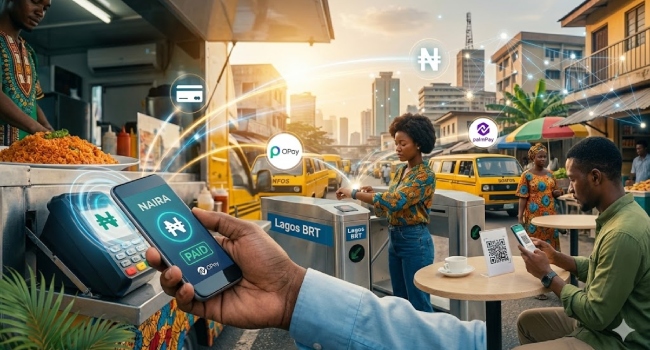
If you live in Nigeria today, you already feel it! Money now moves more by phone than by hand. Nigerians pay for groceries, transport, rent, and even school fees with instant transfers. Young Nigerians now use different digital tools, from a forex trading app for side investments to instant transfers and mobile wallets for everyday spending.
This change is not just a feeling. It is backed by hard numbers released in the last few months.
On 3 July 2025, reports noted that Nigeria processed 7.9 billion real-time transactions in 2024, based on data from EnterpriseNGR. That made Nigeria Africa’s leading real-time payments market and placed it among global leaders like India, Brazil, and Thailand. Those 7.9 billion payments represented 2.97% of the entire world’s 266.2 billion real-time transactions in 2024.
Real-time payments sit inside a much bigger cashless story. On 29 July 2025, new reports citing fresh NIBSS data showed that electronic payment transactions hit ₦284.99 trillion in Q1 2025. That was a 17.7% increase over the ₦234.49 trillion recorded in Q1 2024. Point-of-sale (PoS) payments alone reached ₦10.45 trillion in that same quarter, more than double the ₦3.62 trillion seen a year earlier.
The report also highlighted how quickly PoS terminals are spreading. In January 2025, there were 5.5 million active PoS terminals in Nigeria. By March 2025, that number had risen to 5.9 million. In the same months of 2024, only about 2.4–2.6 million terminals were active. That means more physical touchpoints for digital money in markets, motor parks, and small shops.
The growth is not only in one quarter. NIBSS data, summarised in an August 2025 insight note, showed that total electronic payments in Nigeria reached around ₦1.07 quadrillion in 2024, the highest level ever recorded. Another analysis of the same NIBSS figures noted that about 11.2 billion e-payment transactions were processed in 2024, a rise of more than 15% year-on-year.
Real-time rails are doing most of the heavy lifting. A payment trends review published in June 2025 using ACI Worldwide data found that NIBSS Instant Payments (NIP), launched back in 2011, accounted for 82.1% of all cashless transactions in Nigeria in 2023. It also estimated that 27.7% of all transactions in the country in 2023 were real-time payments, and projected that this share could reach 50.1% by 2028.
This growth is now being recognised at a continental level. In November 2025, AfricaNenda’s SIIPS 2025 work cited NIP as Africa’s first “mature” instant payment system, and highlighted that instant payments across Africa altogether reached nearly US$2 trillion in value in 2024, with Nigeria as a major contributor.
The macroeconomic impact is also being measured. A December 2024 analysis of Nigeria and South Africa’s real-time payments estimated that in 2023, real-time payments added around US$7 billion to Nigeria’s GDP. It is projected that this contribution could grow to US$15 billion by 2028, assuming adoption continues to deepen. For policymakers and investors, this is no longer just “fintech hype”. It is a measurable part of growth.
The Central Bank of Nigeria (CBN) leaders recently shared updated data. At Nigeria Fintech Week 2025 in Lagos, the Central Bank of Nigeria (CBN), through a representative of Olayemi Cardoso, said that electronic payment volumes increased from 3.9 billion (valued at ₦280 trillion) in August 2024 to 4.12 billion (valued at ₦384 trillion) by July 2025, reflecting growing adoption of digital payment channels
The social side of this shift is visible. More Nigerians now hold formal bank or wallet accounts. NIBSS reported in August 2025 that BVN-linked bank account holders had reached 66.2 million, and that total cashless transaction values had grown from ₦237.11 trillion in Q1 2024 to ₦295 trillion in Q1 2025. That means more people are inside the formal system, able to receive transfers, credits, and remittances directly.
Of course, this path is not smooth. The same NIBSS and media data that celebrate growth also hint at stress points. When monthly breakdowns of NIP usage show dips, like the fall from ₦100.06 trillion in January 2025 to ₦88.87 trillion in February before a recovery in March, analysts link part of this to network pressures and seasonal effects. Nigerians know the lived reality behind those numbers: queues at PoS stands when networks fail, and merchants holding goods while “awaiting alert”.
There are also fraud concerns. As transaction volumes rise into the hundreds of trillions of naira, banks and regulators repeatedly warn the public about fake alerts, phishing links, and social-engineering scams.
The rapid growth in real-time transactions, while positive, leaves less time to detect suspicious activity before money moves. This is why stronger authentication, better user education, and tighter monitoring are recurring themes at fintech conferences and CBN forums. Still, the direction of travel is clear.
In 2023, just over a quarter of Nigeria’s transactions were real-time. By 2028, it may be half. In 2024, Nigeria handled 7.9 billion real-time payments and more than a quadrillion naira in e-payments overall. In Q1 2025 alone, the country processed nearly ₦285 trillion electronically, with PoS volumes more than doubling year-on-year. These are not abstract figures. They describe how Nigerians now pay, save, send, and receive money.
For ordinary citizens, the benefits are straightforward: faster payments, more choice, and often more safety than carrying cash. For businesses, especially SMEs, real-time settlement can improve cash flow and reduce operational risk. For the wider economy, the data now show a clear link between real-time payments and GDP.
There is still work to do. Infrastructure must keep up. Fraud controls must tighten. Regulations need to protect users without killing innovation. But the last 12–18 months of data tell a consistent story: Nigeria is moving steadily toward a cash-light economy, and real-time payments are at the centre of that shift.