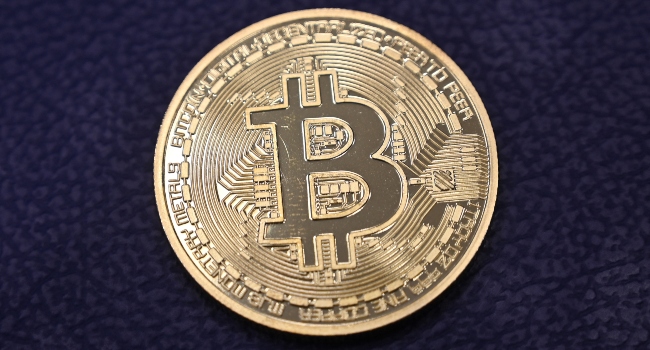
Beyond trading, crypto is beginning to feature in how some Nigerians think about saving and protecting value in an environment shaped by frequent currency fluctuations.
This shift is evident in the growing use of dollar-linked stablecoins as a store of value, with households opting to hold savings in these assets while continuing to rely on the naira for everyday transactions.
This shift has important implications for monetary management, which is most effective when households and businesses primarily hold value in the local currency and within the banking system.
Policy tools such as interest rate adjustments, liquidity control, and standing facilities typically work by transmitting through banks, shaping lending and deposit rates and, in turn, influencing saving and spending decisions.
However, as dollar-linked stablecoins increasingly serve as a store of value for some families and small businesses, local interest rates alone no longer fully determine how savings decisions are made.
Nigeria has been running a notably tight monetary stance. The CBN Monetary Policy Committee maintained the policy rate at 27.0% during its late-November 2025 meeting and kept the 45% cash reserve requirement for deposit money banks while making changes to the MPR corridor.
These settings are not neutral, because they aim to anchor inflation expectations while supporting exchange-rate stability. If households respond to uncertainty by moving into dollar-linked tokens, rate hikes may become less effective at drawing funds back into naira deposits.
The stablecoin “parallel store of value” effect looks like a form of digital dollarization. It does not require opening a domiciliary account, walking into a bank, or finding physical dollars.
A user can convert naira into USDT or USDC through various channels and hold a synthetic dollar balance that is easy to transfer and easy to break into smaller amounts. This behavior creates unpredictable changes in the demand for naira balances, which makes it harder for the central bank to assess liquidity conditions and public inflation expectations.
The system changes in two ways because the speed and routes of money flows shift. Tight monetary policy aims to increase the reward for keeping money in the bank, encouraging saving in interest-earning assets while also restraining credit expansion.
For many, the main advantage of stablecoins is reducing currency risk rather than generating interest. When that is the motivation, the central bank can raise rates and still see limited “return” in terms of increased demand for naira deposits, especially if people believe exchange-rate volatility will erase the gains from higher nominal interest.
Foreign exchange is where this intersects most visibly with business behavior. Nigeria’s reform period focuses on improving market transparency and the functioning of FX markets because companies need a tradable currency and reliable payment channels to set prices, buy inputs, and manage payroll.
When FX access is unreliable, users may rely on stablecoins for importing goods and services, paying for software, settling contractor fees, and sending remittances. As stablecoins move from emergency use to routine settlement, the monetary policy analysis needs to track the shift because it signals whether businesses trust formal financial channels again.
Regulators have worked to bring this activity under clearer supervision, rather than leaving it entirely in the shadows. In late 2023, the CBN issued guidelines that allow banks to provide designated accounts and settlement services to SEC-licensed virtual-asset service providers, while still prohibiting banks from dealing on their own account.
The design is meant to improve visibility into flows, strengthen anti-money laundering and counter-terrorism financing controls, and reduce the risks that arise when large-value transfer networks operate outside the banking perimeter. Better monitoring of conversion and settlement helps policymakers, even if it does not eliminate the public’s preference for dollar-linked stores of value.
The policy environment is also shaped by legal and market-structure factors. Nigeria’s Investment and Securities Act 2025 expanded the legal framework for virtual and digital assets under the capital-market regulator’s authority.
In January 2026, the SEC introduced new minimum capital requirements, reaching billion-naira levels for certain digital-asset businesses, with a 2027 deadline for participants to comply. This recapitalization process will influence which firms survive, how liquidity concentrates, and how consumer protection is enforced. For the central bank, a smaller number of better-capitalized intermediaries can reduce fraud and payment disruptions that undermine trust.
Household adoption creates a measurement problem for researchers and policymakers. Standard monetary aggregates, banking deposits, and payment-system data do not capture the full picture when people store value in offshore-referenced tokens.
If more savings shift into stablecoins, the link between money growth and spending can change, and velocity becomes harder to interpret. In that situation, observed outcomes may appear less connected to policy actions, not because policy is irrelevant, but because a growing part of the savings function sits in instruments the central bank does not issue.
There is also a distributional angle. Stablecoins may be the only practical hedge for households that cannot access formal hedging tools or face barriers to official foreign-currency access.
This can provide some relief from inflation, but it can also deepen a two-track system in which people spend in naira but save in digital dollars. Over time, that can influence wage negotiations, business pricing, and how quickly inflation expectations fall, even when official inflation prints begin to ease.
In the end, stablecoins do not replace monetary policy in Nigeria, but they do change the environment in which it operates. They function as a parallel savings channel, ease some FX frictions, and provide an immediate signal of currency confidence.
The most important shift may come when households begin to see naira savings as predictable again, because that is when central bank signals transmit more strongly across the economy.