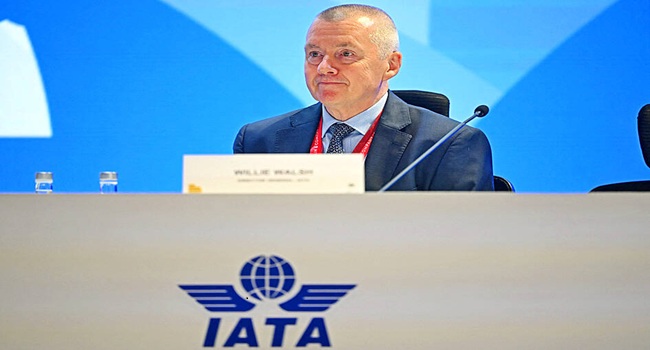
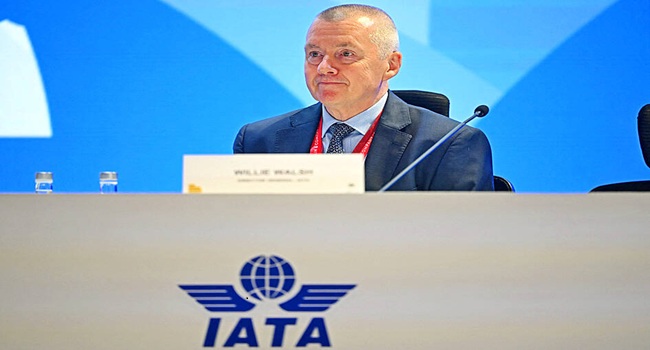
EU targets aimed at increasing the use of so-called sustainable aviation fuel (SAF) by airlines in a bid to cut fossil fuel emissions are “not achievable,” the head of the IATA airline industry body said Thursday.
Targets set by the European Union in 2023 call for SAF to constitute 20 per cent of airlines’ fuel use by 2035, up from around two per cent currently.
“We’re not seeing progress in terms of the production of SAF,” IATA chief Willie Walsh told an industry event in Paris. “I always felt that the EU’s ambition was not achievable. I still hold that view.”
“We’re way behind where we believe we need it to be,” he added, reiterating his group’s criticism of EU climate targets for airlines in recent months.
Airline executives say SAF is not widely available and is too expensive, hampering competitiveness as passenger traffic is forecast to surge worldwide in the coming decade.
READ ALSO: IATA Projects $41bn Global Airline Net Profit In 2026
The EU rules require carriers to include two per cent of SAF in their fuel mix starting this year, rising to six per cent in 2030 and 20 per cent in 2035 before soaring to 70 per cent from 2050.
Last month, the IATA estimated that global SAF production would reach 1.9 million tonnes in 2025, nearly double the amount produced the previous year.
But production growth is expected to slow this year, reaching 2.4 million tonnes—which would represent just 0.8 per cent of a fuel mix still dominated by traditional jet fuel.
In March 2025, a European Commission spokesman denied that the targets would be up for review, saying, “We consider the current SAF targets to be realistic and feasible.”
Walsh said Thursday that despite his doubts on SAF, airlines would still aim to cut their pollution emission levels in half by 2050 compared with 2005 levels.
“Airlines remain committed to the long-term objective,” Walsh said.
AFP