


The post JUST IN: Protesters Storm National Assembly Over Ramat’s Stalled NERC Confirmation appeared first on Naija News.
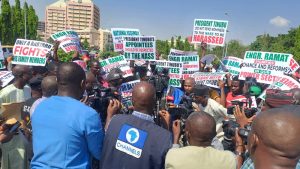
The post JUST IN: Protesters Storm National Assembly Over Ramat’s Stalled NERC Confirmation appeared first on Naija News.
The post Tinubu Likely To Win Middle Belt In 2027 – Sam Amadi appeared first on Naija News.
The post Tinubu Seeks Senate Confirmation Of FCCPC, NPC, RMAFC, NERC Nominees appeared first on Naija News.
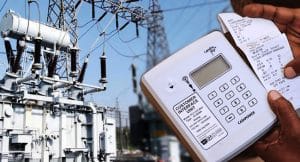
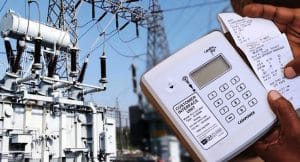
A spokesperson for the Special Adviser to the President on Energy, Eriye Onagoruwa, conveyed this promise on Monday during the second Nigerian Electricity Supply Industry Stakeholders Meeting of 2025, which the Nigerian Electricity Regulatory Commission (NERC) organised.
Onagoruwa stated that the presidency acknowledges the critical need to resolve the debt overhang, which has burdened GenCos and hindered electricity supply across the nation, potentially resulting in the shutdown of the country’s power sector.
She further elaborated that President Tinubu’s administration is exploring alternative debt instruments in light of its current fiscal limitations.
“We are empathetic to what GenCos are facing,” she said. “We are exploring alternative debt instruments, and I can confirm that both the Coordinating Minister of the Economy and the Debt Management Office are aligned with this effort. Internal approvals are currently underway,” she stated.
The ₦4 trillion gas debt had become a lingering challenge in Nigeria’s power sector despite promises of its resolution.
In April of 2025, Generation Companies (GenCos) threatened to shut down Nigeria’s power sector due to the outstanding ₦4 trillion debt owed to market operators.
Previously, the Minister of Power, Adebayo Adelabu, had expressed a commitment to settle 50 per cent of the ₦4 trillion debt by the year’s end.
At the same time, stakeholders in the power sector cautioned that the federal government must take decisive action to prevent the impending collapse of the nation’s power sector.
Naija News reports that despite the privatisation of the Nigerian power sector more than ten years ago, it continues to face significant issues such as inconsistent power supply, vandalism, inadequate infrastructure, insufficient investment, a gap in electricity access, grid failures, and various other challenges.
The post Tinubu Govt Moves To Clear Nigeria’s ₦2 Trillion Electricity Debt appeared first on Naija News.
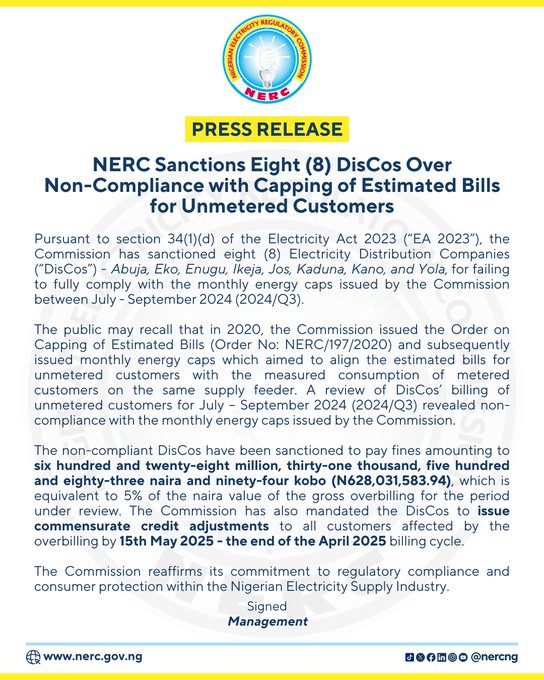
According to a statement on Thursday, NERC sanctioned eight DisCos for failing to comply with monthly energy caps for unmetered customers between July and September 2024.
The affected DisCos sanctioned for overbilling unmetered customers include Abuja, Eko, Enugu, Ikeja, Jos, Kaduna, Kano, and Yola.
These DisCos have been fined over ₦628 million and are required to issue credit adjustments to affected customers by May 15, 2025, Naija News reports.
The Commission noted that its action is pursuant to Section 34(1)(d) of the Electricity Act 2023 and follows the failure of the affected Discos to fully comply with the monthly energy caps issued by NERC between July-September 2024.
The statement noted that the sanction underscores NERC’s unwavering commitment to regulatory compliance and consumer protection within the Nigerian Electricity Supply Industry.
Meanwhile, African Development Bank (AfDB) President, Akinwumi Adesina, has emphasized that Africa’s growing youth population should be seen as an economic advantage rather than a challenge, stressing the need for significant investment in human capital development and financial support.
Speaking in an interview on Channels Television’s Sunrise Daily on Thursday, the former Nigerian Minister of Agriculture dismissed the idea of empowerment schemes that offer small financial incentives, insisting that young people require substantial funding to bring their ideas to life.
“In the case of young people and the japa syndrome, it’s a big loss for us,” Adesina stated, referring to the trend of Nigerian youth migrating in search of better opportunities abroad.
“Young people don’t need freebies; they don’t need people saying: ‘I just want to give you an empowerment programme.
“They have skills, they have knowledge, they have entrepreneurship capacity, they want to turn their ideas into great businesses.
“What young people need is not those empowerment programmes; they need capital, they need you to put your money at risk on their behalf,” he noted.
The post NERC Fines 8 Discos Over ₦628 Million For Overbilling Customers appeared first on Naija News.
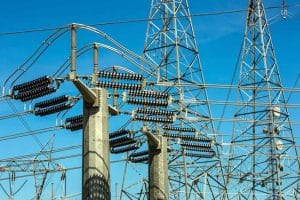
In a recent report, NERC outlined the payment remittances made by both domestic and international bilateral customers, as well as special customers, following invoices issued by the Market Operator in Q4 2024.
The report highlighted that six international bilateral customers, who are supplied electricity by Generation Companies (Gencos) in Nigeria, collectively paid $5.21 million against a cumulative invoice of $14.05 million, resulting in a payment performance of just 37.08 percent.
These international customers included Paras-SBEE in Benin Republic ($2.65m); Paras-CEET also in Benin ($1.64m); Transcorp-SBEE (Ughelli) in Benin paid $1.71m out of $3.59m; Transcorp-SBEE (Afam 3) paid $0.90m out of its $1.2m invoice; Odukpani-CEET in Togo owes $2.37m.
Notably, only Mainstream-NIGELEC, another international customer, paid the full amount of $2.60 million, meeting their invoice without any shortfall.
The report also showed that Nigeria’s domestic bilateral customers made a cumulative payment of ₦1.25 million against the ₦1.98 million invoice issued to them. This resulted in a 63.36 percent remittance performance.
It was noted that some customers had made payments toward outstanding invoices from previous quarters, including Paras-CEET, which paid $0.98 million; Pars-SBEE, which paid $0.7 million; and Transcorp-SBEE, which paid $1.3 million.
Additionally, the Market Operator (MO) reported receiving payments from domestic bilateral customers toward outstanding invoices from previous quarters, including NDPHC-Weewood: ₦21.17 million, North South/Star Pipe: ₦11 million, Taopex: ₦83 million and Trans-Amadi (OAU/FMPI): ₦20.74 million
The NERC also pointed out that the special customer, Ajaokuta Steel Co. Ltd, along with its host community, failed to make any payments toward its 2024/Q4 invoices, which total ₦1.27 billion (NBET) and ₦0.11 billion (MO).
“This continues a longstanding trend of non-payment by this customer,” the report stated, urging the relevant Federal Government authorities to intervene in the matter.
In terms of revenue, Nigeria’s electricity distribution companies (DisCos) generated a total of ₦509.84 billion in Q4 2024, which accounts for 77.44 percent of the ₦658.40 billion billed to customers during the period.
This represents an improvement in collection efficiency compared to Q3 2024, where the DisCos collected ₦466.69 billion out of a billed ₦626.02 billion, resulting in a collection efficiency of 74.55 percent.
“The 77.44 percent collection efficiency recorded in Q4 2024 is an increase of 2.89 percentage points compared to the 74.55 percent recorded in Q3 2024,” NERC stated.
The post Benin Republic, Togo Owe Nigeria $8.84 Million For Q4 2024 Electricity Consumption appeared first on Naija News.
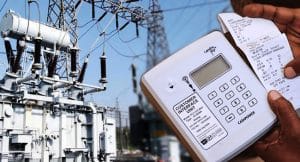
Naija News reports that NERC disclosed this information on its social media platforms on Monday following the commission’s inaugural Nigerian Electricity Supply Industry Stakeholders meeting for 2025.
The MAP framework facilitates the provision and upkeep of end-user meters as a service provided by external investors, from which customers utilizing these meters pay metering service fees.
According to NERC regulations, “if a customer chooses to make advance payments for meters under these guidelines, the meter’s cost shall be reimbursed through energy credits by the distribution licensee. The repayment schedule will be determined by the commission, considering an assessment of the distribution licensee’s financial status.”
Nevertheless, consumer advocacy groups have raised concerns that the Discos have been unreliable in reimbursing customers who received meters through the MAP initiative.
To ensure transparency and promote customer participation in the scheme, the regulator has mandated that refund details be publicly accessible on their websites.
“NERC has directed Discos to publish details of MAP refunds on their websites for transparency. This will demonstrate commitment and consistency to the scheme and encourage customers,” the commission stated.
The Federal Government has said it is working to close the metering gap, which includes more than seven million unmetered users.
President Bola Tinubu‘s Special Advisor on Energy, Olu Verheijen, has said that the government intends to meter all consumers in order to lower industry losses.
“The government is intervening in the short term by making sure that the registered customers within the Disco have meters because no matter what your tariff is, you need to make sure that you can collect and reduce your collection losses. And so, that’s one of the interventions. You’ve heard about the Presidential Metering Initiative, which looks to consolidate all the different metering initiatives that are funded by different entities.
“And so, we have the ability to know what your consumption is, what you can afford to pay, and make sure that we’re collecting the revenues from that and improving cash flow that way. It’s the first approach to making sure that DisCos have the financial capacity or cash flows that are required to drive investments in reliability and green access,” Verheijen stated.
The commission revealed that in order to discuss the status of the Nigerian electricity supply industry, it hosted its first NESI Stakeholders meeting of 2025 at its headquarters.
Naija News understands that the tariff methodology and the effects of the state transition, NESI liquidity, the market’s financial assessment, and the shift to a multi-tier electricity market in relation to the state electricity regulatory commissions were among the subjects covered.
The commission said that the quarterly meeting brings together energy stakeholders to discuss the state of the NESI and address critical issues in the sector.
The post FG Issues Fresh Directive To Discos On Electricity Meter appeared first on Naija News.
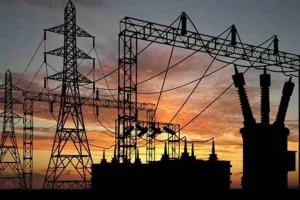
A statement from the minister’s media aide, Bolaji Tunji, revealed that Adelabu was deeply concerned about the recent grid disturbances that caused widespread power outages across parts of the country twice in one week.
To address the issue, he summoned an emergency meeting with the leadership of the Nigerian Electricity Regulatory Commission (NERC) and the Transmission Company of Nigeria (TCN) over the weekend.
Adelabu expressed his dissatisfaction with the situation, noting that the grid collapses threatened to undermine the progress made in the power sector over the past year, which had seen the generation and distribution of 5,527 megawatts — a record high in three years.
In response, the minister formed a forensic investigation committee tasked with identifying the root causes of the incidents and advising the government on measures to strengthen the national grid.
The committee’s scope includes assessing ongoing initiatives like the Presidential Power Initiative and the Nigeria Electricity Transmission Project, as well as examining potential sabotage.
The statement added that the committee would conduct a comprehensive review of the grid’s stability, identifying the necessary investments and technical improvements required to make the system smarter and more resilient.
Additionally, a technical team has been deployed to evaluate critical points in the grid to detect vulnerabilities and recommend solutions to prevent future disruptions.
Adelabu explained that a partial collapse occurred on Monday, October 14, due to a line tripping at the Jebba Transmission Substation and a recurring fault at the Osogbo Substation.
While efforts to restore the grid initially encountered setbacks, the system was fully restored by Wednesday, October 16.
The minister clarified that the issues on Tuesday were not new collapses, but part of ongoing restoration efforts from Monday.
On Saturday, October 19, what was reported as another collapse was actually a deliberate shutdown of the grid following a transformer explosion at the Jebba Substation.
This disruption was resolved within two hours. Adelabu emphasized that the events were grid disturbances rather than full collapses.
Preliminary investigations indicated that the Jebba transformer explosion was caused by aging equipment unrelated to the earlier grid failure.
The six-member investigation team includes key officials: Engr Nafisat Ali, Executive Director of the Independent System Operator; Dr. Chidi Ike, NERC Commissioner; Engr Ishola, General Manager of the National Control Centre; Engr Emmanuel Nosike, Director of Transmission at the Federal Ministry of Power; Engr Ali Sharifai, General Manager of the Transmission Service Provider; and Mr. Adedayo Olowoniyi, the minister’s Chief Technical Adviser.
The committee is expected to submit its findings to the minister by November 1, 2024.
The post Power Minister Sets Up Committee To Address Grid Collapses appeared first on Naija News.
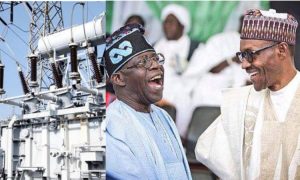
According to findings reported by The PUNCH on Sunday, Nigeria secured approximately 10 loans worth $4.36 billion from the World Bank in the last ten years to address key power sector challenges.
While not all of these loans have been fully disbursed, the Federal Government, alongside other multilateral organizations, has injected billions of naira into the sector in an attempt to stabilize it.
However, despite these funds, the national grid has continued to experience frequent failures, leaving large parts of the country in darkness and hindering economic activities.
Both Buhari and Tinubu, leaders of the All Progressives Congress, made commitments to improve the power sector.
Yet, the sector’s persistent challenges appear to have outpaced the efforts of the Buhari administration, which followed former President Goodluck Jonathan’s tenure.
Data from the Nigerian Electricity Regulatory Commission (NERC) and other sources show that during Buhari’s eight years in office, from June 2015 to May 2023, the grid collapsed about 93 times.
The national grid, an extensive system of transmission lines connecting power plants to consumers, operates within a set of stability parameters. According to NERC, it is designed to function at specific voltage (330kV ± 5%) and frequency (50Hz ± 0.5%) levels.
Deviations from these stability ranges can lead to power quality issues and, in severe cases, full or partial system collapses.
“Any deviation from these stability ranges can result in decreased power quality and, in severe cases, cause widespread power outages ranging from a partial collapse of a section of the grid to a full system collapse.
“When the electricity demand is higher than the supply, the grid frequency drops. Conversely, if supply surpasses demand, the frequency increases. In reaction to the grid operating at a frequency outside of the normal operation range (especially when the frequency is too low), safety settings on generation units may cause the units to shut down.
“This often exacerbates the frequency imbalance on the grid thereby causing more generation units to shut down resulting in a full or partial system collapse,” the regulator explained.
Naija News reports that each time the grid collapses, large sections of the country plunge into darkness, severely impacting businesses and daily life.
Data indicates that during Buhari’s administration, the grid collapsed three times in 2015, 28 times in 2016, 24 times in 2017, 13 times in 2018, and 11 times in 2019.
The frequency of grid collapses appeared to improve slightly between 2020 and 2023, with 14 collapses recorded during that period before Buhari left office in May 2023.
Under Tinubu’s administration, grid failures have continued, with three collapses occurring between June and December 2023 alone.
Nigerians experienced widespread blackouts on September 14, 2023, after a fire damaged a key transmission line, leading to a grid collapse.
A few days later, another collapse plunged the country into darkness, marking the third incident in just five days.
In 2024, the grid has collapsed about nine times so far. Last week, there were three collapses, each leading to nationwide blackouts and public outrage.
In total, the Tinubu administration has seen at least 12 grid collapses within its first 16 months in office.
With 12 collapses recorded during Tinubu’s 16-month tenure, the power sector’s instability remains a significant concern for the nation.
On Saturday, yet another collapse occurred, marking the third such incident in a single week.
The post How National Grid Collapsed 105 Times Under Tinubu, Buhari Govt Despite Major Investments appeared first on Naija News.
According to the report released by NERC, the four foreign companies in question are Para-SBEE and Transcorp-SBEE in Benin Republic, Mainstream-NIGELEC in Togo, and Odukpani-CEET in Togo.
These companies failed to remit payments amounting to $3.15 million, $4.46 million, $1.21 million, and $5.36 million, respectively.
The report also highlighted that none of the bilateral customers within Nigeria made any remittances against the cumulative invoice of ₦1.86 million issued to them during the same period.
Despite these lapses, NERC noted that some bilateral customers, both local and international, made payments towards outstanding Market Operator invoices from previous quarters.
A total of $5.96 million was received from two international customers, while eight local customers paid ₦505.71 million towards settling debts incurred before Q1 2024.
The commission expressed concern over what it termed “payment indiscipline” exhibited by both local and international bilateral customers.
It emphasized the need for the Market Operator, an arm of the Transmission Company of Nigeria (TCN), to invoke the market rules to address the issue.
In a related development, it was reported in May that international consumers failed to remit approximately $51.26 million for electricity exported from Nigeria in 2023.
Additionally, bilateral power consumers within Nigeria did not remit about N7.61 billion to the power sector in the same year.
NERC condemned the situation, urging the Market Operator to take necessary actions to curtail the non-payment trend.
The post Togo, Benin Owe Nigeria $14 Million For Electricity – FG appeared first on Naija News.


