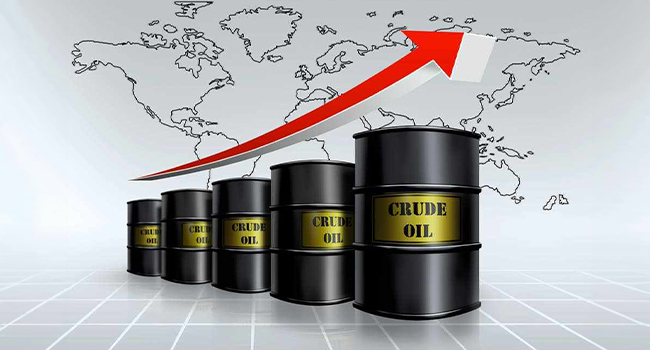

Brent crude oil soared more than five per cent Thursday on fresh worries about energy supplies from the Middle East after Iran threatened to hit Gulf facilities in retaliation for an attack on one of its key gas fields.
The contract jumped 5.1 per cent to $112.84 before sliding back to $108 as of 7:48 AM WAT, while West Texas Intermediate was up 2.5 per cent at $98.69 in Asian trade.
This is as US President Donald Trump threatened to “massively blow up” a vast Iranian gas field unless Tehran stops striking Qatari energy facilities, which sustained extensive damage Thursday.
Crude oil prices surged five per cent as the latest strikes fed fears that the nearly three-week-old war could inflict lasting damage on global energy supplies.
Tehran has carried out a series of attacks on Gulf energy sites, including on Qatar’s huge Ras Laffan LNG facility, in retaliation for an Israeli strike on Iran’s South Pars gas field — part of the world’s largest natural gas reservoir.
Trump called for a social media post to halt strikes on both Iranian and Qatari energy sites.
Washington “knew nothing” of Israel’s earlier attack on Iran’s South Pars gas field, he said, vowing that “NO MORE ATTACKS WILL BE MADE BY ISRAEL” on the site if Tehran stops attacking Qatar.
But if Iran did not comply, the United States would “massively blow up the entirety of the South Pars Gas Field”, Trump warned.
READ ALSO: Key Middle East Energy Sites Under Fire
The crisis in global energy markets has been felt as far away as the South Pacific, where nations like Samoa and Tonga are heavily reliant on imported petroleum.
In Samoa, about two-thirds of the country’s energy generation comes from imported diesel fuel.
Leaders of Samoa and Tonga appealed for help this week as the import-reliant Pacific nations raised fears of possible fuel shortages and escalating costs.
In Nigeria, Premium Motor Spirit (PMS) prices have soared from below N200 per litre in 2023 to above N1,000 at the pump, resulting in higher inflation rates and escalating food prices.