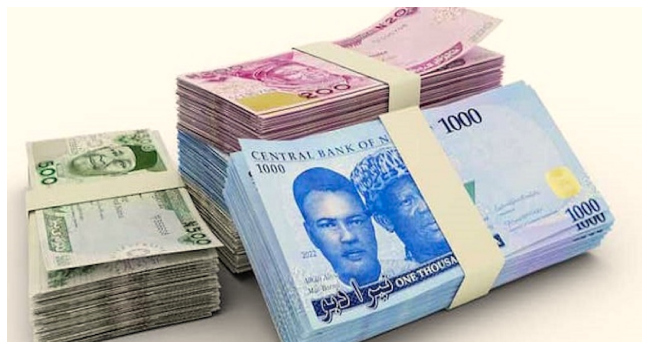
The Federal Government, states, and local governments shared a whopping ₦6 trillion Federation Account Allocation Committee (FAAC) disbursements in the third quarter of last year.
This was revealed Tuesday in an analysis of the FAAC Q3 allocation released by the Nigeria Extractive Industries Transparency Initiative (NEITI).
A breakdown of the disbursements showed that the federal government received ₦2.19trn, states received ₦1.97trn, and local governments received ₦ 1.45trn.
The statement in Abuja by the Director of Communication & Stakeholders Management, Obiageli Onuorah, described the organisation described the allocation as a historic rise in federation account receipts and distributions.
More than doubling allocations over two years, the report contained in the agency’s Quarterly Review noted that the ₦6trn included 13 per cent payments to derivative states, explained that year-on-year quarterly FAAC allocations in 2025 grew by 55.6 per cent compared with Q3 of 2024.
The review also showed that statutory revenues accounted for 62 per cent of shared receipts, while Value Added Tax (VAT) was 34 per cent, and Electronic Money Transfer Levy (EMTL) and augmentation from non-oil excess revenue each accounted for 2 per cent, respectively.
The distribution to the 36 states comprised revenues from statutory sources, VAT, EMTL, and ecological funds. States also received additional ₦100 billion as augmentation from the non-oil excess revenue account.
According to the report, allocations to states showed that Lagos State recorded the highest revenue at ₦179.3bn for the quarter, translating to an average monthly receipt of ₦ 59.76bn. Kano came second with ₦79.2bn, while Rivers State came third with ₦ 78.8bn.
Besides, Nasarawa State received the lowest allocation of ₦42.5bn, followed by Ebonyi State with ₦ 42.9bn and Ekiti with ₦ 43bn. The data also showed an average monthly allocation of ₦14.1bn to Nasarawa state, indicating that the range between the highest and lowest state allocations was ₦ 136.8bn.
Also, Lagos’ allocation of ₦179bn was more than double the amount received by the second and third highest – grossing states -Kano and Rivers, respectively, NEITI stated.
From the quarterly review, nine oil-producing states, it said, received ₦424bn as 13 per cent derivation revenue. This materially altered state rankings in the review, throwing up the derivative states as receiving nearly half of the gross allocations from FAAC.
The derivative disbursements showed the four oil-producing states – Akwa Ibom, Bayelsa, Delta, and Rivers States in the stand-out region, with Delta state grossing the highest in revenue allocation of ₦180.68bn.

NEITI also revealed that the deductions from states’ allocations to service debt and other obligations totalled ₦225.89bn, which indicates a 6.5 per cent decline from the previous quarter. The average debt service ratio across states was 9.4 per cent, with individual state ratios ranging from 1.5 per cent to 26.8 per cent.
However, about one-third of the states had a debt service ratio of less than 5 per cent, while more than two-thirds had a ratio of less than 10 per cent. Ogun State, with a ratio of 26.8 per cent, topped the chart, closely followed by Lagos (26.5 per cent), and Cross River ranked third, the NEITI report disclosed.
On the outlook for Q4 2025, the NEITI quarterly review noted that early Quarter 4 indicators showed lower average oil prices and slightly higher exchange rates compared with Quarter 3 figures. 1.64 million barrels per day was recorded as average daily crude oil production in Q3, while 1.59 million barrels per day was recorded in the first month of Quarter 4, it said.
According to NEITI, these developments, if sustained, could reduce foreign exchange-denominated inflows and lead to lower distributable revenues in Q4 of 2025.

The NEITI report also disclosed that derivation revenue from the solid minerals sector was unavailable for distribution to Federation Account beneficiaries because it was negligible and insufficient for distribution. The last distribution of revenues from solid minerals occurred in August 2024.
The Executive Secretary of NEITI, Sarkin Adar, welcomed the strong remittance performance and the reduction in states’ debt burden, but drew attention to the volatility in oil markets and optimistic budget benchmarks, which may pose risks to fiscal sustainability.
To protect gains and strengthen fiscal resilience, NEITI recommended the publication of up-to-date balances and liabilities for key federation accounts, including the non-oil Excess Account, Domestic Excess Crude Account, Stabilisation Fund, Ecology Fund, and other mineral resource-linked accounts.
“The publication should provide clear notes explaining FAAC transactions, refunds, net-offs, and priority project entries in order to enhance transparency in the inflows, allocation,s and disbursements from the federation accounts,” it advised.
READ ALSO: World Bank Projects Nigeria’s 2026-2027 Economic Growth At 4.4%
The review also pointed out the need to apply the Appropriation Act benchmarks consistently when determining monthly distributable revenues, use the Stabilisation Account to smooth monthly disbursements, and transfer exchange gains into stabilisation buffers.
It called on the Office of the Accountant General of the Federation, the Revenue Mobilisation Allocation and Fiscal Commission (RMAFC) FAAC, the National Economic Council (NEC), the National Assembly, and state governments to act on the recommendations to strengthen transparency, accountability, and long-term fiscal sustainability.
“Though the Quarter 3 2025 FAAC results are encouraging, NEITI reiterates that the data presents an opportunity to the government to institutionalise prudent fiscal practices that will protect the gains that have been recorded so far in growing revenue and reduce vulnerability to commodity shocks.
“The Q3 2025 FAAC results are encouraging, but windfalls must be managed with discipline. Greater transparency, realistic budgeting, and stronger stabilisation mechanisms will ensure these resources deliver durable benefits for all Nigerians,” Adar said.
NEITI urged the government at all levels to ensure the growth of Nigeria’s sovereign wealth and stabilisation capacity, by committing to regular transfers to the Nigeria Sovereign Wealth Fund and other related stabilisation mechanisms in line with the fiscal responsibility frameworks.
It further advised governments at all levels to adopt realistic budget benchmarks by setting more conservative and achievable crude oil production and price assumptions in the budget to reduce implementation gaps, deficit, and debt metrics.
This, it said, is in addition to accelerating revenue diversification by prioritising reforms that would attract investments into the mining sector, expedite legislation to modernise the Mineral and Mining Act, support reforms in the downstream petroleum sector, as well as the full implementation of the Petroleum Industry Act (PIA) to expand domestic refining and value addition.