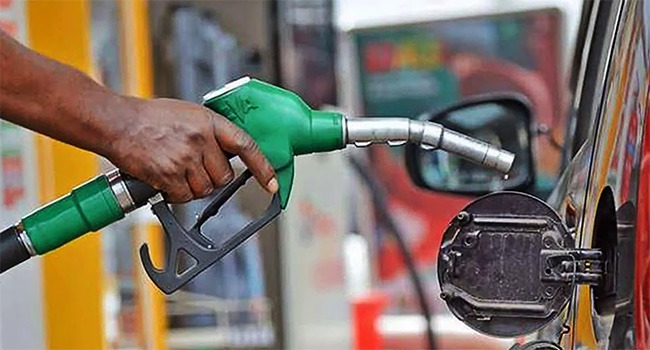
A Senior Advocate of Nigeria (SAN), Olisa Agbakoba, has argued that the petrol price in Nigeria should be sold at ₦400 per litre, as opposed to the current price of over ₦1,350 per litre.
The Maritime law expert said this in a remark during the 2026 Energy Conference organised by the National Association of Energy Correspondents of Nigeria (NAEC) on Thursday in Lagos.
Speaking on the conference theme, “Access To Assets: Empowering Players & Driving Growth”, Agbakoba advocated for a petrol price cut as the nation attains self-sufficiency in petroleum products refining.
He argued that some major oil-producing nations, such as Saudi Arabia, apply a price differential in the sale of crude to domestic refiners to offset rising prices of gasoline and reduce pressure on the cost of living.
Agbakoba advised the Nigerian government to apply a similar policy being used in major crude-producing countries.
“There’s something called a subsidy. Is it a burden? We have a number of presidential candidates. Can we please ask them what they intend to do about the subsidy? It’s a big issue. I was telling my colleague yesterday, in 2023, that there was a particular medication I bought for pain at ₦800. Now, I buy it for ₦20,000. The problem is that some of the presidential candidates have changed their views on subsidy. And I see that we are at a conference that concerns crude oil pricing.
“So, what should be the appropriate price for crude? I challenge your conference to educate Nigerians because it is connected to their current cost of living challenges. Now, President Tinubu said the subsidy is gone. Did he say that subsidy is gone for a particular context? The context was, and I agree with him, that the subsidy in the past was full of corruption. And therefore, it’s gone. But he didn’t say that he would not consider a new price differential.
“Therefore, what will the presidential candidates say to us? Who will receive our votes? Will they be prepared to tell us that if they become elected, the price differential for crude locally will be $40, even if it is $100 or whatever internationally? And therefore, we can buy our petrol for ₦400. Wouldn’t that be good news? Please push that agenda,” Agbakoba said.
The senior advocate of Nigeria maintained that the proposal would involve setting a different price for crude supplied to the domestic market, irrespective of fluctuations in the international market.
According to him, such a policy could reduce the cost of petrol and ease the burden on households, while urging energy journalists to educate Nigerians about the relationship between crude pricing and the cost of living.
“Let us get that. Because I always think my speciality is called development law, which is looking at how law impacts any aspect of the economy. So what is impacting Nigerians today is hunger.
“And the reason why Nigerians are hungry is that the price of petroleum is too high. So we should be looking at that presidential candidate who can make a statement that the crude oil price differential locally will be different. And you can fact-check it if you have your phones as to what Saudi Arabia does. Their price differential for the domestic market is different.
“If I’m a young farmer, I have 20 members in my family. And I produce 1,000 yams to sell to you. But I sell to my family. So I keep them aside. I sell to you at ₦400, and I sell to my family at ₦400; does it make sense? I’ll keep them free. It is in the national interest for a presidential candidate to tell us that the burden we face will be lifted. Because they’ll either give us petroleum for free, or at least at an affordable cost. And my recommended affordable cost is ₦400.”
The former NBA president also questioned the structure of the Federal Government’s management of the energy sector, arguing that the president should no longer be the minister of petroleum.
Agbakoba, who was an awardee at the conference, said the country needs a unified ministry to oversee its major energy resources, including electricity, gas and crude oil.
“We are discussing energy, which is important. So, I’ll pose one or two issues that you can consider in your in-house process. Number one, the Nigerian president cannot be minister of petroleum. He can’t. Number two, it’s time to merge electricity, gas, and crude into one overall ministry called the Ministry of Energy,” he advised.
He also raised concerns about the divestment of oil and gas assets by international oil companies, warning that the process could create problems similar to those encountered by Nigeria’s electricity distribution companies.
He cautioned that investors acquiring oil assets need to properly examine the legal and structural issues surrounding the assets before proceeding.
“This divestment that is taking place is going to be the same problem that the DisCos faced. You start to build a 20-storey building without a foundation. So, all these guys that have come here as sponsors – how many of them bothered to do legal enquiries for their assets? They just go to work. These are some of the issues you should think about,” he stated.
Agbakoba further linked the energy sector’s policy decisions to the welfare of ordinary Nigerians, arguing that the debate over crude pricing should not be treated as an issue affecting only oil companies and government revenues.
He urged the energy sector and the media to place the impact of petroleum pricing on households and businesses at the centre of the national debate.
His comments come as the Federal Government has proposed a measure to cap petrol prices at about ₦1,350 ($1.02) per litre.
Finance Minister Taiwo Oyedele said the measure had become necessary after fuel costs surged to record highs, driven by rising global oil prices amid Middle East tensions.
The government also plans a 30-day fuel discount programme, selling petrol at cost and prioritising public transport to ease pressure from soaring pump prices.
Oyedele said the government could impose a windfall tax on energy companies found to be profiteering at consumers’ expense, with proceeds earmarked for transport subsidies and fuel vouchers for low-income urban workers.
Rising fuel prices have revived fresh cost-of-living pressure on President Bola Tinubu’s government ahead of elections in January.