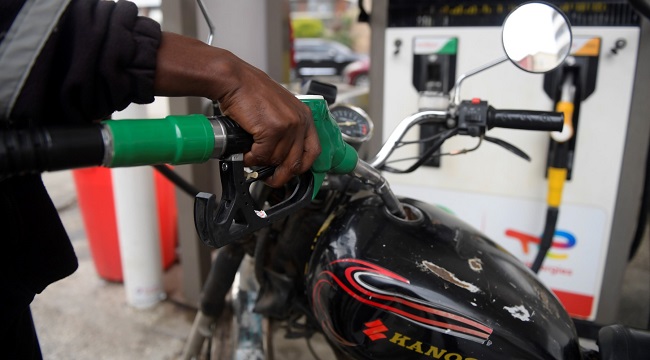
The Federal Government’s decision to offer Nigerians a 30-day discount on petrol has reopened a familiar debate: how can a government committed to ending fuel subsidies provide relief without undermining its own economic reforms? The answer may lie less in the discount itself than in what happens when the 30 days are over.
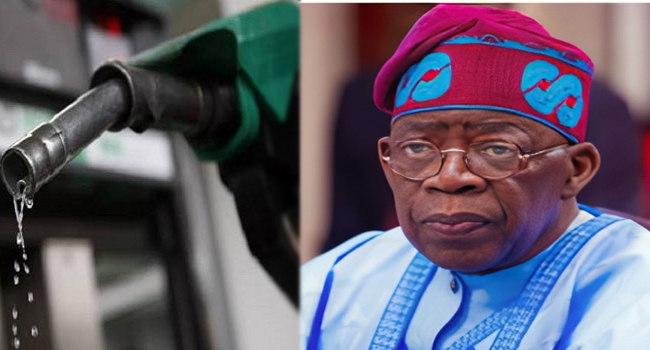
There is something almost ironic about the Federal Government’s latest intervention in Nigeria’s troubled petrol market. Three years after President Bola Tinubu declared that fuel subsidy was gone, his administration has announced a temporary discount on petrol sold through Nigerian National Petroleum Company Limited (NNPC) filling stations.
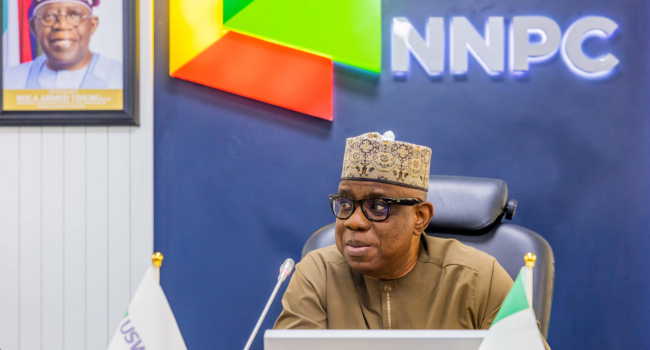
The discount, which will run for an initial 30 days, will give priority to public transport operators. Announcing the measure on Thursday, October 8, the Minister of Finance and Coordinating Minister of the Economy, Taiwo Oyedele, insisted that it did not amount to the return of subsidy. Rather, he explained, the government would be selling petrol at cost, foregoing its margin to provide temporary relief.

That distinction may be economically significant. But to millions of Nigerians struggling with transport fares, food prices and the general cost of living, the terminology is unlikely to matter as much as the actual savings.
The questions are straightforward: How much cheaper will petrol become? Who will benefit? Will transport fares fall? And, perhaps most importantly, what happens after the 30 days?
THE CASE FOR THE DISCOUNT
To begin with, the government’s decision deserves consideration on its merits. Since the removal of petrol subsidy in May 2023, Nigerians have endured successive increases in fuel prices, with consequences extending far beyond the filling station.
Petrol is not merely a commodity consumed by motorists. It is an important input into transportation, commerce, small-scale manufacturing and household energy generation.
When petrol prices rise, transport operators increase fares. Traders face higher distribution costs. Small businesses spend more on generators. Households find that the same income buys considerably less.
The government’s latest intervention is therefore an acknowledgement that macroeconomic reforms, however necessary, cannot be judged solely by their fiscal outcomes. They must also be assessed by their impact on people’s lives.
There are at least three compelling arguments in favour of the discount.
First, it could provide immediate relief to consumers. Even a modest reduction in pump prices would offer some respite, particularly to commercial transport operators who purchase substantial quantities of petrol daily.
Second, prioritising public transportation is a sensible policy choice. A reduction in operating costs for buses, taxis and other commercial vehicles has the potential to benefit a much larger population than a general discount enjoyed primarily by private motorists.
Third, the temporary nature of the intervention could make it more fiscally manageable than the open-ended subsidy regime that Nigeria struggled to sustain for decades. If NNPC is genuinely reducing its retail margin rather than selling petrol below its full economic cost, the arrangement could provide limited relief without recreating the enormous fiscal obligations associated with the former subsidy system.
In principle, this is a defensible approach: intervene selectively, provide temporary support and avoid making commitments the public treasury cannot sustain. But sound principles do not automatically translate into successful policies.
THE PROBLEMS BENEATH THE PROMISE
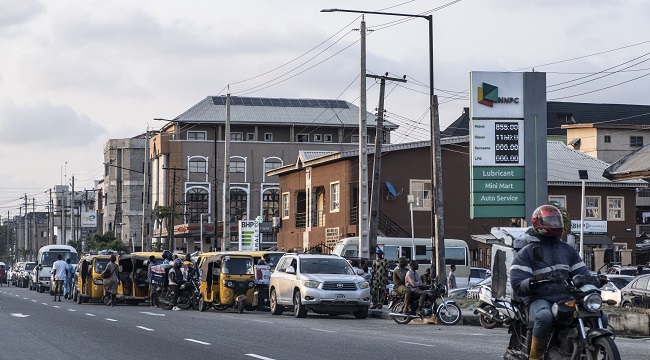
The first weakness is the limited duration of the discount. Thirty days may offer temporary relief, but Nigeria’s cost-of-living crisis is not a 30-day problem. Transport fares, food prices and household expenses have risen over several years. A brief petrol discount cannot reverse the cumulative erosion of purchasing power.
There is also the question of scale. The government has yet to establish clearly how much consumers will save per litre under the discount. Without that information, it is difficult to estimate the real benefit to households or transport operators.
Consider a hypothetical discount of ₦50 per litre.
A commercial driver purchasing 50 litres daily would save ₦2,500. Over 30 days, that could amount to ₦75,000, assuming the driver buys that quantity every day and receives the full discount. That is not insignificant. But would it be enough to persuade the driver to reduce passenger fares? And if fares do fall, would the reductions survive the end of the discount?
The problem is that prices in Nigeria often rise quickly when costs increase but respond much more slowly when costs decline.
A transport operator may welcome cheaper petrol without passing the benefit to passengers. In that situation, the policy would support transport operators’ incomes without necessarily reducing the burden on commuters.
This is why the government’s decision to prioritise public transporters must be accompanied by a credible mechanism for ensuring that ordinary passengers benefit. Otherwise, the intended relief could stop at the filling station.
IS THIS SUSIDY BY ANOTHER NAME?
Perhaps the most contentious issue is whether the new arrangement represents a partial return to fuel subsidy.
The government insists that it does not.
There is an important distinction between selling petrol below its economic cost and selling it at cost while foregoing a commercial profit margin.
In the first case, somebody must finance the difference between the selling price and the actual cost. In the second, the seller sacrifices some or all of its profit. But even the second arrangement carries an economic cost. NNPC is a commercially oriented national oil company. Any reduction in its earnings could affect its profitability, dividends, or contributions to public revenue.
Consequently, while the discount may not constitute a conventional petrol subsidy, it is not necessarily cost-free. The public deserves to know precisely who is bearing the financial burden, how much revenue is being forgone, and whether the arrangement has any implications for the national treasury.
Transparency is particularly important because Nigeria’s previous subsidy system was undermined by opaque accounting, disputed consumption figures and weak accountability. The country cannot afford to recreate those problems under a different label.
THE WIDER PETROL PRICE INTERVENTION

The 30-day discount is only one element of a broader government response. The Finance Minister has also announced plans for a price-modulation mechanism built around a proposed ₦1,350-per-litre ceiling on the ex-gantry or landing cost of petrol. Crucially, this is not a proposed ₦1,350 retail pump price. Under the arrangement being negotiated, refiners and importers would initially absorb costs above the ceiling and recover them when market conditions improve. The ceiling would be reviewed monthly.
The objective is understandable.
Frequent petrol price changes create uncertainty for transporters, businesses and households. A more predictable pricing environment could improve planning and reduce the tendency for temporary fuel price spikes to become permanent increases in other goods and services.
However, this mechanism raises difficult questions. What happens if international oil prices remain elevated for several months? What if the naira weakens substantially? How will refiners and importers recover their losses if prices do not subsequently decline?
If companies are compelled to absorb prolonged losses, they may reduce supplies, raise financing costs or seek compensation elsewhere.
And if government eventually assumes those losses, a price-stabilisation mechanism could become a subsidy obligation in practice.
The challenge, therefore, is to balance price stability with the commercial viability of the downstream petroleum industry.
THE DANGER OF MARKET DISTORTION
Another concern is the competitive impact of offering discounts exclusively through NNPC retail outlets.
Nigeria has spent years attempting to liberalise its downstream petroleum market, encourage private investment and reduce dependence on government-controlled pricing.
A temporary NNPC discount could undermine that objective if privately operated filling stations cannot compete with the reduced prices.
Consumers would naturally gravitate towards cheaper NNPC stations, potentially creating long queues, uneven distribution and opportunities for diversion.
Private marketers, meanwhile, could experience reduced sales despite purchasing their products at prevailing market prices. If the arrangement is extended repeatedly, the implications for competition could become more serious.
There is also a geographical dimension. NNPC retail outlets are not distributed uniformly across the country. Nigerians living far from participating stations may receive little or no benefit.
A policy presented as nationwide relief must not become an advantage enjoyed disproportionately by residents of major cities and communities with convenient access to NNPC stations.
THE POLITICAL CALCULATION

It would be unrealistic to ignore the political implications of this decision. Nigeria is moving steadily towards the 2027 general elections. Economic hardship remains one of the most significant challenges confronting the Tinubu administration.
The opposition has already seized on the announcement. Former Vice-President Atiku Abubakar has criticised the discount as a temporary political gesture, questioning what happens when the 30-day period expires. Other opposition groups have raised similar concerns about the adequacy and timing of the intervention.
These criticisms are politically predictable, but they raise legitimate policy questions. At the same time, it would be unfair to dismiss every government attempt to reduce hardship simply because an election is approaching. Governments have a continuing responsibility to respond to economic pressures, regardless of the electoral calendar.
The relevant test is whether the intervention is transparent, economically defensible and capable of producing measurable benefits.
For the Tinubu administration, the political stakes are considerable. The removal of petrol subsidy was one of its defining early decisions. The government defended the policy as necessary to restore fiscal discipline, eliminate distortions and redirect resources towards development. A carefully structured temporary discount need not contradict that reform. But repeated interventions that blur the distinction between market pricing and government support could weaken the credibility of the original policy.
The administration must therefore explain not only why the discount is necessary but also how it fits into its broader economic strategy.
WHAT GOVERNMENT SHOULD DO DIFFERENTLY
If the objective is to reduce the burden on Nigerians, the petrol discount should be treated as a bridge to more durable measures rather than an end in itself.
The government should publish the precise discount per litre, the expected financial cost, participating stations and the eligibility criteria for public transport operators.
It should also establish a system for monitoring whether commercial transport fares respond to lower fuel costs.
Beyond that, greater attention must be paid to structural solutions.
Accelerating the availability of compressed natural gas vehicles, improving mass transportation, reducing logistics bottlenecks and supporting efficient domestic refining would offer more sustainable benefits.
Targeted assistance to low-income households could also be more equitable than broad petrol price reductions.
The World Bank has previously highlighted the regressive nature of universal petrol subsidies, observing that wealthier households tend to capture a disproportionate share of the direct benefits because they consume more petrol. This is why the government’s emphasis on public transportation is potentially valuable. But its success will depend on execution.
A transparent, time-bound intervention with measurable outcomes is fundamentally different from an indefinite commitment to artificially low prices.
Nigeria needs more of the former and must avoid returning to the latter.
THE REAL TEST COMES ON DAY 31

Ultimately, the Federal Government’s petrol discount is neither the economic breakthrough its supporters may wish to portray nor necessarily the policy reversal its critics suggest. It is a limited intervention with potentially useful short-term benefits and significant implementation risks.
Its merits are clear: immediate relief, possible reductions in transport costs and a recognition that economic reform must have a human dimension.
Its weaknesses are equally apparent: uncertain savings, limited coverage, possible market distortions and the absence, so far, of a clearly defined transition beyond the initial 30 days.
For Nigerians, the most important measure of success will not be the number of litres sold at a discount or the number of filling stations participating.
It will be whether the policy makes daily life more affordable. And that brings us to the central question.
WHAT HAPPENS ON DAY 31?
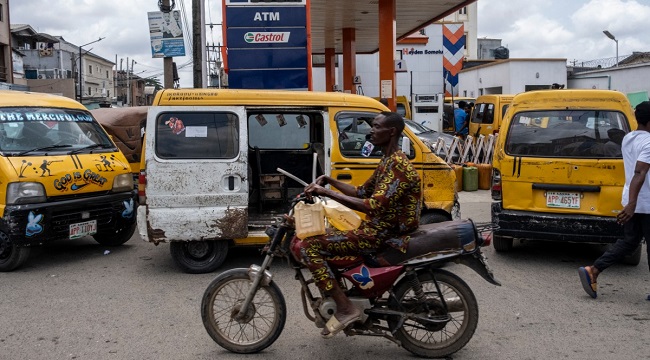
If petrol prices simply return to their previous levels, transport fares remain unchanged, and household costs continue to rise, the discount may be remembered as little more than a reprieve.
But if the government uses the period to demonstrate a credible approach to price stability, improve public transportation and accelerate longer-term energy reforms, the initiative could mark a useful adjustment in economic policy.
Nigeria does not need to choose between fiscal discipline and compassion. A responsible government should be capable of pursuing both.
The challenge is to provide relief without recreating the very distortions that made subsidy removal necessary in the first place.
Thirty days of cheaper petrol may buy Nigerians some relief. What the government must now demonstrate is how it intends to deliver something far more valuable: lasting affordability.
———————-
Editorial note: This analysis reflects announcements and reported reactions as of the evening of October 8, 2026. The precise per-litre discount, final implementation rules and fiscal cost had not been fully established in the reports reviewed.