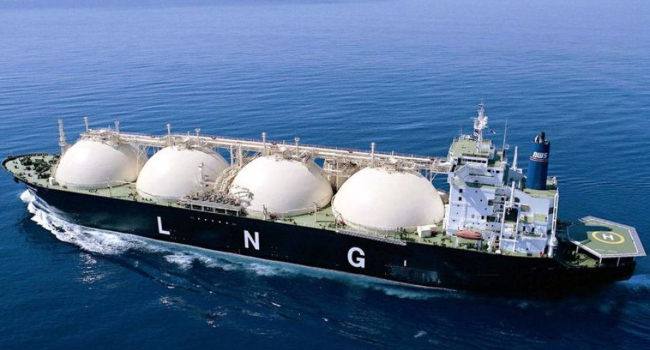
Nigeria’s revenue from the export of liquefied natural gas (LNG) will get a major boost in 2026 as global output is set to jump.
A boost in global supply will ease constraints seen since the 2022 Ukraine war that dampened prices, which could spur demand, including from top importers China and India, analysts say.
This year marks the start of a large wave of supply that analysts expect to last until 2029, depressing prices that could drive more demand from emerging economies.
“2026 is expected to be a transitional year for the LNG market,” said Kpler in a report quoted by Reuters. “The market is expected to move away from tightness toward ample availability, with sufficient supply even as winter demand and storage needs emerge, particularly in Europe.”
Nigeria
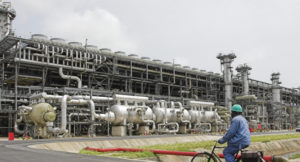
Nigeria’s LNG exports saw a significant rebound in late 2025, hitting a five-year high in December with 2.1 billion cubic meters exported, driven by improved gas supply and plant utilisation, according to statistics from the Nigerian Upstream Petroleum Regulatory Commission (NUPRC).
The development positions Nigeria for a major surge in gas exports as new facilities like Nigeria LNG Train 7 come online, boosting its role as a key African supplier despite earlier challenges with theft and infrastructure.
- Improved Supply: Increased feed-gas availability and higher plant utilisation at facilities like NLNG boosted output.
- Infrastructure Progress: Developments on key pipelines like OB3 (Obiafu-Obrikom-Oben) improved gas flow.
- Future Growth: 2025 marked the start of a new era, with capacity expected to grow significantly with projects like NLNG Train 7.
- Regional Context: Nigeria’s improved performance placed it ahead of rivals like Algeria.

Estimates from S&P Global Energy, Kpler, and Rystad Energy forecast at least 35 million metric tons of new capacity coming online this year, primarily from the U.S. and Qatar.
This could lift global LNG supplies by up to 10% year-on-year, with 2026 supply forecasts from Kpler, Rystad, ICIS, and Rabobank in a range of 460 million and 484 million metric tons.
Projects like Golden Pass LNG on the U.S. Gulf Coast and Qatar’s North Field expansion are expected to contribute sizable volumes, while output is set to ramp up from Corpus Christi and Plaquemines LNG in the U.S., LNG Canada and the Greater Tortue Ahmeyim projects offshore Senegal and Mauritania.
The additional supply will pressure global prices, with analysts from Rabbobank, Rystad, and Kpler predicting a range of averages for Asian spot LNG from $9.50 to $9.90 per million British thermal units (mmBtu) in 2026, down from an average of $12.45 in 2025.
Rystad and Kpler gave forecasts for gas prices at the Title Transfer Facility in the Netherlands, the European benchmark, to average in a range of $9.50 to $9.74 per mmBtu this year, down from an average of $14.20 in 2025.
With Asia LNG and European gas prices easing, price spreads to U.S. benchmark Henry Hub will narrow, squeezing U.S. LNG export margins at a time when feedgas costs are rising, said analysts at Vortexa, Rabobank, and S&P Global Energy.
Nigeria’s share in global LNG supply has fluctuated, holding around 6% in 2022, ranking it the sixth-largest exporter, but facing increased competition and potential oversupply, though ongoing expansions like NLNG Train 7 aim to boost its output and global position from roughly 22 to 30 MTPA.
Recent figures showed it exported 5-8% of global LNG in early 2025, reflecting its significant reserves (Africa’s largest) and strategic role in supplying Europe.
Nigeria possesses substantial natural gas reserves, officially standing at over 210 trillion cubic feet (Tcf) of proven reserves as of early 2025, making it Africa’s largest and a globally significant holder, with potential unproven reserves even higher.
These reserves rank the country among the world’s top gas-rich nations, positioning it as a key energy player for domestic use and export, despite current production being a fraction of its total potential.
READ ALSO: Davos: US ‘Behaving Very Strangely’ For An Ally — ECB Chief

Nigeria’s Key Figures & Rankings:
-
- Proven Reserves: Over 210 Tcf (210.54 Tcf reported as of Jan 2025).
- Global Rank: Among the top 8-11 countries worldwide.
- Africa Rank: Largest in Africa.
- 2025 Gas Exports: Gas exports rose in late 2025, with December 2025 exports reaching ~101.9 billion scf, valued at over ₦482 billion.
- Expansion Projects: The $4.3bn Train 7 project aims to significantly increase capacity, boosted by new long-term gas supply contracts signed in 2025.

China, Ghana To Drive Global Demand
Asia’s LNG demand, which slipped in 2025 on price sensitivity and competition from alternative fuels, is forecast to recover by 4% to 7% this year, led by China and India as lower prices spur additional spot purchasing, fuel switching, and stockpiling, according to a range of outlooks from Rystad, Kple,r and S&P Global Energy.
New contracts will also add to rising imports, with Chinese demand expected to rise by 6 million to 7 million tons and Indian demand by 5 million tons, said Kpler analyst Nelson Xiong.
“Much of the new contracted supply should be absorbed domestically,” he said.
China’s 2025 imports slumped amid weak industrial demand, U.S. tariffs, and strong domestic and piped gas supply. Demand this year is set to rise but may still fall short of 2024 levels, said Rystad Energy analyst Ole Dramdal, forecasting imports at 76.5 million tons this year, up 12% from 2025, as Beijing prioritizes domestic production.
However, a substantial surplus of China’s contracted volume will likely be remarketed as the country’s long-term LNG contracts are expected to reach above 80 million tons per year, Dramdal added, while Turkey, Malaysia, and Taiwan will see their combined imports rise by 6.2 million tons in 2026.
READ ALSO: Sahara Foundation, Partner Sign MoU To Advance Inclusive Recycling, Community Empowerment
Europe Absorbs Supply
Europe became a driver for global LNG demand after it cut Russian supply following Moscow’s full-scale invasion of Ukraine.
Kpler sees Europe’s 2026 LNG imports rising by 22 million tons, while Rystad forecasts an increase of 20 million tons, and Energy Aspects and ICIS see gains of around 13 million tons.
This is driven by higher storage injection needs after lower end-of-winter inventories, higher domestic gas consumption amid softer average TTF prices, growing Turkish demand, and its role as a balancing market for rising Atlantic basin supply.
“Europe has been poised to absorb a large share of the new LNG supply, showing the strongest near-term incremental demand,” Reuters quoted Rystad’s Dramdal.
Europe will begin phasing out Russian piped gas and LNG this year, with analysts expecting LNG cargoes from the Yamal project to find alternative destinations like Turkey and Egypt, while Europe backfills the displaced volumes with Atlantic basin supply.