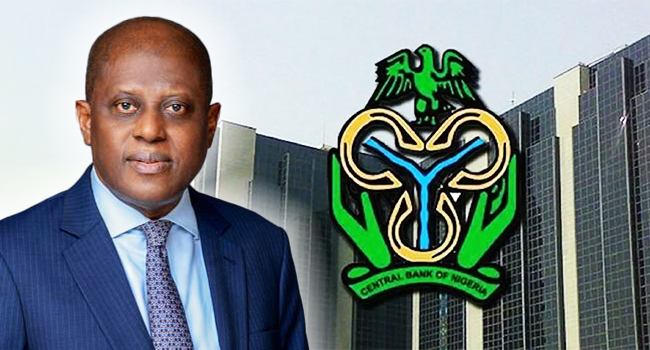
External reserves will climb to $51.04 billion in 2026, up from $45 billion in 2025, according to a fresh prediction by the Central Bank of Nigeria (CBN).
The projection is contained in the Macroeconomic Outlook for Nigeria, 2026, titled ‘Consolidating Macroeconomic Stability Amid Global Uncertainty’, published by the CBN on Tuesday.
“The external reserves are projected at $51.04bn in 2026, compared with $45.01bn in 2025. The external reserves are expected to be boosted by reduced pressure in the FX market based on the anticipated rise in oil earnings, sovereign bond issuance, and diaspora remittance inflows.
“Additionally, Dangote refinery’s expansion of its nameplate capacity to 700,000 bpd from 650,000 bpd in 2025 and eventually to 1.4 million bpd in the medium term would further support the growth in external reserves,” the report read.
Nigeria’s external reserves as of Monday, 29 December 2025, stood at $45.45bn, following days of steady accretion.

In the FX market, the apex bank noted that reforms are expected to further enhance efficiency and transparency, narrow the premium between the Nigerian Foreign Exchange Market and Bureau de Change rates, and sustain exchange rate stability.
In addition, improved domestic oil refining capacity is expected to reduce foreign exchange demand for fuel imports.
It also projected a more stable and resilient economy in 2026, despite lingering global uncertainties, citing the impact of reforms implemented since 2023 and improved macroeconomic coordination.
According to the report, the outlook for 2026 is “cautiously optimistic”, with expectations that the economy will stabilise further as growth picks up modestly, inflation continues to moderate, and the foreign exchange market remains stable.

The Bank also projected improved activity in the non-oil sector, although it noted that structural constraints persist.
The CBN said that following a prolonged period of monetary tightening to curb inflationary pressures, it eased its policy stance in September 2025 to support domestic growth and investment. The decision, it said, was driven by “continuing disinflation, sustained exchange rate stability, and improved liquidity conditions”.
It added that external buffers strengthened during the period due to increased remittance inflows through International Money Transfer Operators (IMTOs), steady oil receipts, and rising non-oil exports, which collectively supported naira stability.
The Bank also reported “substantial progress” in its transition towards a full-fledged inflation-targeting regime, supported by improved forecasting tools, modelling frameworks, and enhanced policy communication.

According to the Outlook, strategic policy decisions taken in 2025 improved price and exchange rate stability, boosted capital inflows, and strengthened the resilience of the financial system.
It noted that significant progress was also recorded in the ongoing banking sector recapitalisation exercise, with many banks already meeting the new capital thresholds.
“As a result of the implementation of coordinated macroeconomic policy measures and the impact of the reforms, the Outlook projects a more stable and resilient Nigerian economy in 2026,” the report stated, adding that inflation is expected to continue moderating, output growth to strengthen, and foreign exchange stability to be sustained, leading to further reserve accumulation.
The document stressed the need for harmonised fiscal and monetary policies, institutional reforms, and tailored guidelines to sustain investor confidence and economic momentum.
It also stressed the importance of maintaining orthodox monetary policy and continued reforms in the foreign exchange market to ensure price and exchange rate stability.

Beyond diagnostics, the Outlook outlined policy priorities across key sectors, including the use of Public-Private Partnerships (PPPs) to drive inclusive growth, improve productivity, and boost job creation.
While noting encouraging prospects, it warned that achieving these goals would require sustained reform commitment and careful management of domestic and global risks.
“As the monetary authority of Nigeria, the Bank remains steadfast in achieving its core mandate of price stability while promoting sustainable development and fostering economic resilience,” the Deputy Governor, Economic Policy, Muhammad Sani Abdullahi, said.
He added, “The Bank will sustain its regulatory oversight and commitment to ensuring that policies are timely, data-driven, and supportive of a stable macroeconomic environment.”
On inflation, the CBN anticipates that headline inflation will decelerate further to 12.94 per cent in 2026, driven by a combination of factors, and is expected to come down to 10.75 per cent in 2027.
According to data from the National Bureau of Statistics, inflation has been falling for consecutive months, supported by the base-year effect.
As of November, headline inflation had dropped to 14.45 per cent, relative to the October 2025 headline inflation rate of 16.05 per cent.
However, the NBS said the Consumer Price Index rose to 130.5 points in November 2025 from 128.9 points in October, reflecting a 1.6-point increase month-on-month.
The CBN stated, “Inflation is expected to continue its downward trend in 2026. The inflation outlook is predicated on continued stability in the foreign exchange and energy markets, the lagged effect of previous rate hikes, and improved policy coordination.
“Headline inflation is projected to further decelerate to 12.94 per cent in 2026 from 21.26 per cent estimated for 2025. The anticipated moderation would be driven by declining food and premium motor spirit prices. The expected deceleration in PMS prices would be driven by increasing competition within the midstream segment of the oil industry.
“Furthermore, the anticipated faster decline in food prices is expected to drive the slower pace of inflation. This would be on account of the expected increase in food supply following the launch of various agriculture sector-based policies, improved security in major food-producing regions, and favourable weather conditions.”
READ ALSO: World Bids Farewell To 2025, A Year Of Trump Tariffs, Truces, Turmoil
The CBN also added that in the transition phase, monetary policy will be flexible to balance price stability and growth objectives.
Hence, the Monetary Policy Rate, the Cash Reserve Ratio, and other instruments would be adjusted appropriately to manage the growth in money supply and attain a non-accelerating inflation growth path.
On projected monetary conditions in 2026, the CBN said they are expected to be relatively loose in view of the macroeconomic stability observed in 2025, as inflation and exchange rate risks continue to subside.
“In line with its price stability mandate, the Bank will deploy appropriate tools to anchor expectations, foster financial stability, and promote confidence in the economy.
The trajectory of monetary aggregates in 2026 is expected to be influenced by external conditions and fiscal operations.
Changes in the naira value of foreign currency deposits, arising from exchange rate movements, will continue to influence monetary aggregates.
Nevertheless, the Bank’s policy stance, complemented by measures to stabilise the foreign exchange market, is expected to moderate the growth rate of monetary aggregates in 2026,” the bank said.
On the fiscal front, the apex bank noted that the outlook for 2026 is broadly positive, buoyed by sustained improvements in domestic crude oil production and the phased implementation of the Nigeria Tax Act, 2025, which is expected to strengthen non-oil revenue mobilisation.
“However, downside risks persist. A sustained decline in global oil prices below the budget benchmark and an unexpected reduction in oil production could undermine projected oil revenues.
“Elevated debt service obligations, extra-budgetary spending, and a potential rise in statutory transfers due to pre-election spending could further constrain the fiscal space.
“The fiscal outlook for 2026 is vulnerable to various risk factors. Notably, a budget risk could crystallise if crude oil prices and domestic production fall below benchmarks, thereby dampening the optimism about oil revenue contribution (57.01 per cent) to the total revenue outcome in 2026.
“Although crude oil production is expected to ramp up in the near term, the domestic oil sector remains sensitive to global shocks. The expectation of a strong non-oil revenue performance in 2026 is hinged on the successful implementation of the Nigeria Tax Act, 2025, and the sustenance of the ongoing tax effort.
“However, low tax awareness and compliance levels, as well as gaps in tax administration systems, remain significant risks to tax revenue projections,” the bank noted.

In the financial sector, the CBN expressed concerns about rising non-performing loans and their impact on banks, saying, “Rising NPLs pose a direct threat to banks’ profitability, credit availability, and overall risk-bearing capacity.

“This underscores the need to sustain measures to ensure that worsening NPLs do not weaken banks’ balance sheets, impair asset quality, and trigger systemic contagion. Although recent gains in capital adequacy and liquidity ratios provide a buffer, these indicators remain susceptible to unforeseen macroeconomic shocks.
“An increase in credit losses or foreign exchange illiquidity could erode capital reserves, breach prudential thresholds, and strain liquidity coverage. These conditions could disrupt financial intermediation, diminish market confidence, and amplify vulnerabilities across the banking sector.”