![[2025] Tinubu’s Tax Reforms, Dangote/Marketers Row: Nigeria’s Economy In Retrospect](https://youthousereporters.com.ng/wp-content/uploads/2025/12/74302-Cash-Naira.jpg "Cash-Naira.jpg")
Year 2025 has been an interesting one for Nigerians.
It stands as a year that existing economic happenings will dovetail into 2026, reshaping Nigeria’s economic landscape for decades to come.
This is because, in addition to the policies already running- majorly subsidy removal, which had led to the rise of Premium Motor Spirit to above ₦1000 per litre at some point, before dropping to above ₦800 per litre, depending on the area- many of the tax reforms already enacted by President Bola Tinubu will begin to take full effect from 2026.
During the year, rising petrol prices led to an escalating cost of living, with prices of goods and services, including transportation, hitting the roof.
Several major tax reform policies were enacted in 2025.
The comprehensive legislation overhauled Nigeria’s tax system, affecting individuals, small businesses, and large corporations.

Nigerian Tax Reform Acts Of 2025
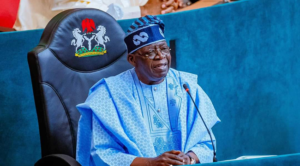
Signed into law on June 26, 2025, by President Bola Ahmed Tinubu, Nigeria’s reforms include four landmark acts:
- Nigeria Tax Act (NTA): Consolidates and streamlines several tax laws, defining companies as either “small” or “large” for simplified compliance. Small companies (annual revenue up to ₦100 million) are now exempt from Companies Income Tax (CIT), Capital Gains Tax (CGT), and the new Development Levy.
- Nigeria Tax Administration Act (NTAA): Creates a unified framework for tax collection across all levels of government and introduces mandatory taxpayer identification numbers (TINs). It also mandates digital compliance, including e-invoicing for VAT-registered businesses.
- Nigeria Revenue Service (Establishment) Act (NRSA): Replaces the Federal Inland Revenue Service (FIRS) with the new, more autonomous Nigeria Revenue Service (NRS).
- Joint Revenue Board (Establishment) Act (JRBA): Facilitates better coordination between federal and state tax authorities, establishes a Tax Ombuds Office for taxpayer complaints, and reconfigures the Tax Appeal Tribunal for dispute resolution.
Key Provisions Of The Reform
-
- Personal Income Tax (PIT): A more progressive rate structure was introduced, with individuals earning up to ₦800,000 annually becoming tax-exempt. The top rate for high earners was increased to 25%. A new rent relief allows for a deduction of up to ₦500,000.
- Corporate Taxation: For large companies, the capital gains tax was increased from 10% to 30%, aligning it with the corporate tax rate. A new 4% Development Levy was introduced on assessable profits, replacing multiple, smaller levies.
- Value Added Tax (VAT): The 7.5% VAT rate was retained, but input VAT recovery was expanded to include services and capital assets. Essential goods like food, medical products, and educational materials were zero-rated to ease the inflationary impact.
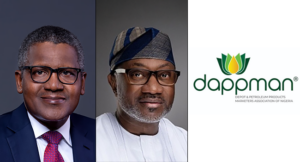
The crisis between Dangote Refinery and oil marketers stemmed from the refinery’s goal to disrupt the traditional fuel import model and establish a dominant market position, which threatened the existing downstream operators.
Dangote had accused marketers of manipulating unions and associations like NUPENG to frustrate his operations by opposing his price reductions and delivery plans.
The marketers, including DAPPMAN, PETROAN, and NARTO, feared existential threats due to the potential loss of their businesses, job losses, and the potential for idle depots if the refinery is allowed to control the supply chain end-to-end.
As the crisis deepened, marketers demanded a more collaborative model where they could still operate and receive products. They argued that Dangote’s investment and market dominance made this a significant point of contention.

Key Issues In The Crisis:
- Market Dominance And Survival: Dangote Refinery’s massive production capacity had posed an existential threat to established import businesses, depot owners, and marketers who had invested heavily in the import infrastructure. If the refinery were allowed to supply products directly to retailers and could sell at a competitive price, it could make their businesses obsolete.
- Distribution Control: The conflict escalated with Dangote’s introduction of over 4,000 Compressed Natural Gas (CNG) trucks for distribution, which marketers saw as a move to bypass their existing network and eventually set aside their union bodies. Marketers argued that their infrastructure was still needed to reach all parts of the country, and that Dangote’s trucks would not be enough for effective nationwide supply.
- Accusations Of Manipulation: Dangote Group accused oil import cartels of manipulating labor unions like NUPENG to oppose the refinery, calling their actions an attempt to maintain a profitable import-dependent system at the detriment of national growth.

- Job Losses: Marketers express concern that a major shift to Dangote’s supply chain could lead to significant job losses for workers in the downstream sector, from depot operations to retail outlets.
- Government Intervention: The crisis has prompted calls for government intervention to mediate a solution that balances the interests of both the refinery and existing marketers. Marketers also called for healthy competition and inclusion in the new system, while Dangote wanted them to stop importing and take his products instead.
Other Key Economic Indicators For 2025 Include:
A Q3 GDP growth of 3.98%, with the services sector being a key driver of this expansion. Inflation is projected to decrease to approximately 31.81%, while the unemployment rate is currently 4.3% and the youth unemployment rate is 6.5%.
Key drivers of growth include an increase in oil production, investor confidence, and reforms in the oil, tax, and financial sectors.
Growth And GDP
- GDP Growth: The real GDP grew by 3.98% year-on-year in the third quarter of 2025, slightly lower than the previous quarter’s 4.23%.
- IMF Projection: The International Monetary Fund (IMF) projected a 3.9% GDP expansion for the full year 2025.
Sectoral Performance:
- Services: Remained the main driver of growth, expanding by 4.15% and accounting for over 53% of real GDP in Q3 2025.
- Non-oil Sector: Grew by 3.91% in Q3 2025, supported by agriculture, information and communication, real estate, and trade.
- Oil Sector: Grew by 5.84% in Q3 2025, a slower pace compared to the previous quarter.

Inflation And Employment
- Inflation: Expected to decrease to approximately 31.81% in 2025.
- Unemployment: The overall unemployment rate was 4.3% as of December 2024, while the youth unemployment rate was 6.5%.
Monetary And Fiscal Policy
- Monetary Policy Rate: 27.00% as of October 2025.
- Treasury Bill Rate: 91-day tenor was 15.3% as of November 2025.
- Tax Reforms: The government has enacted new tax laws to modernize the system and improve revenue generation.
Other Indicators
- Inflation: The year-on-year all-item inflation rate was 16.05% in October 2025, according to the Central Bank of Nigeria.
- Crude Oil Price: The spot price of Nigeria’s reference crude oil was US$70.20 in September 2025.

Nigeria’s Economy Now More Resilient, Says Cardoso
The Governor of the Central Bank of Nigeria (CBN), Olayemi Cardoso, last Friday said Nigeria’s economy has emerged stronger.
He specifically pointed out that the economy can withstand external shocks today than ever in its history, noting that Nigeria and Ethiopia are leading economic recovery on the African continent.

READ ALSO: Tinubu Approves Committee To Drive Implementation Of New Law
Cardoso also said the progress recorded in Nigeria’s banking industry is expected to continue into 2026, as the latest stress test conducted within the subsector showed that the lenders are financially robust.
The CBN governor stated this during his keynote address at the 60th annual dinner of the Chartered Institute of Bankers of Nigeria (CIBN) in Lagos.
While highlighting the positive impact of the apex bank’s reforms on the country’s financial markets, Cardoso mentioned that the regulator will ensure that it does everything to protect the domestic financial market’s integrity.
Intensify Reform Efforts, IMF Tells Nigeria
The International Monetary Fund (IMF) has advised the Nigerian government and those of other emerging economies to redouble efforts on structural economic reforms to shore up growth.
In its World Economic Outlook for October 2025 report, the Fund also noted that global economy was adjusting to a landscape reshaped by new policy measures.
It urged policymakers to restore confidence through credible, transparent, and sustainable policies.
“Trade diplomacy should be paired with macroeconomic adjustment. Fiscal buffers should be rebuilt. Central bank independence should be preserved. Efforts on structural reforms should be redoubled.”

Nigeria’s economy in 2025 is showing positive momentum, with GDP growth exceeding previous years, driven by the non-oil sector, agriculture, and a recovering oil sector.
As seen in statistics released by the NBS, inflation has begun to decline, and the Naira has shown more stability, though macroeconomic stability needs to fully translate into improved living conditions for the population.
Nigeria’s gross domestic product (GDP) grew by 3.98 per cent (year-on-year) in real terms in Q3 2025, the NBS said on Monday.
In its latest report, the NBS said the growth rate is higher than the 3.86 per cent recorded in Q3 2024.
“Gross Domestic Product (GDP) grew by 3.98% (year-on-year) in real terms in the third quarter of 2025.
“This growth rate is higher than the 3.86% recorded in the third quarter of 2024. During the quarter under review, agriculture grew by 3.79%, an improvement from the 2.55% recorded in the corresponding quarter of 2024,” the agency said.
READ ALSO: Nigeria’s GDP Rises By 3.98% In Q3 — NBS
The government’s economic reforms, such as subsidy removal and exchange rate unification, are central to this performance; however, analysts say challenges like insecurity, debt, and rapid population growth remain significant risks.